The short answer is a cautious yes for a small piece of plain, fully baked bread, and a firm no for the dough it is made from. Bread sits in an odd spot for cats: the finished loaf is close to harmless in tiny amounts, while the raw version and several common add-ins are genuinely dangerous. Since cats are obligate carnivores with no real need for bread at all, the honest advice is simple, know the exceptions, and do not bother offering it as a treat in the first place.
As always, the standard note applies: I am a writer, not a vet, and if your cat has eaten raw dough or anything containing raisins, onion, garlic, or xylitol, that is a call to your vet, not a wait-and-see situation.
Plain baked bread: mostly harmless, not remotely useful
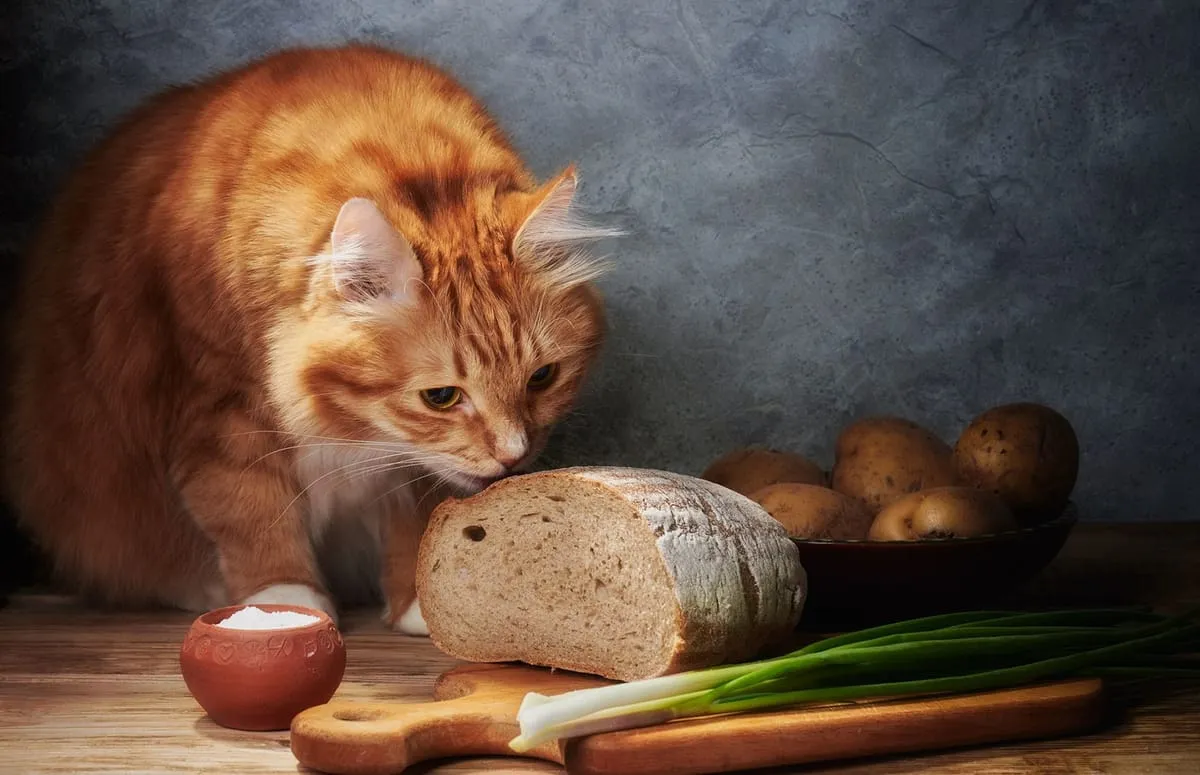
A small piece of plain white or wholemeal bread, properly baked through, is unlikely to cause a healthy cat any harm. That is where the good news ends.
Cats are obligate carnivores, meaning their bodies are built to run on animal protein and fat, not the carbohydrate that makes up almost all of a slice of bread. It has no nutritional value a cat is short on, and a cat that fills up on bread crusts is filling up on something with none of the protein its actual diet needs, which matters more in a small animal than in a dog several times its size. If your cat begs for a bit, an occasional small piece will not hurt, but there is no reason to make it a habit, and a much better option is a tiny piece of plain cooked chicken instead, which at least gives a cat something useful.
The real danger: raw bread dough
This is the part that turns an otherwise dull topic into a genuine emergency, and it catches out cat owners just as often as dog owners, maybe more, since cats jump onto counters dogs cannot reach.
Once bread is fully baked, this risk disappears entirely, since baking kills the yeast and sets the structure. The danger is specifically the raw, rising dough, which is exactly why it is worth keeping proving bowls covered and well away from any surface a cat can reach, not just off the counter but off anywhere it likes to sit.
What might be baked into it
Beyond the dough itself, the other thing worth checking is what else is in the loaf, since a lot of bread is not just flour, water, and yeast.
Raisin and fruit breads are a clear one to avoid. Grape and raisin toxicity is best documented in dogs, where it can cause kidney failure, and while the same risk is far less studied in cats, the sensible approach is to treat them with the same caution rather than assume cats are somehow exempt. Onion and garlic bread are a confirmed risk in cats specifically, since both damage red blood cells and cats are, if anything, more sensitive to that damage than dogs are. Xylitol, an artificial sweetener sometimes used in lower-sugar baking, is well established as toxic in dogs, and again the safest approach with cats is to assume the same and avoid it entirely. Seeded, heavily salted, or richly enriched breads add little benefit and are worth skipping too.
So, can cats eat bread? A small piece of plain, fully baked bread will not usually hurt a cat, though it gives them nothing they actually need. Raw dough is a genuine emergency, and bread containing raisins, onion, garlic, or xylitol should never be offered. Given how little a slice of bread actually does for a cat, the simplest approach is just not to make a habit of it, and to save the good stuff for something on our guide to which human foods are safe for cats.
Common questions
- Is bread safe for cats?
- A small piece of plain, fully baked bread will not usually harm a cat, but it offers nothing a cat actually needs and is pure carbohydrate to an obligate carnivore, so there is no reason to make a habit of it. Raw, rising dough is a genuine emergency, and breads with added ingredients like raisins, onion, garlic, or xylitol are a real risk.
- Why is raw bread dough dangerous for cats?
- A cat's stomach is warm, just like a proving drawer, so raw dough carries on rising once swallowed, which can cause a painful, dangerous swelling and blockage. The yeast also ferments the dough and produces alcohol as it works, which can be absorbed into the bloodstream. A cat that has eaten raw dough needs a vet urgently, so keep any rising dough well out of reach, including off counters cats can jump onto.
- Can cats eat bread with raisins or garlic in it?
- No. Raisins and other dried fruit are best avoided altogether, since their toxic effect in dogs is well established and the safest assumption is that cats are at similar risk even though it is less studied in them. Onion and garlic are confirmed toxic to cats, and cats are actually more sensitive to the red blood cell damage they cause than dogs are, so any bread containing either should be kept away entirely.
- Do cats even want bread?
- Less often than dogs, generally. Cats cannot taste sweetness, so a soft, plain slice does not have the same pull for most of them, though some will happily eat crusts or a torn piece out of curiosity or texture rather than flavour. A cat begging for bread is usually after attention or habit rather than a nutritional need bread can actually meet.