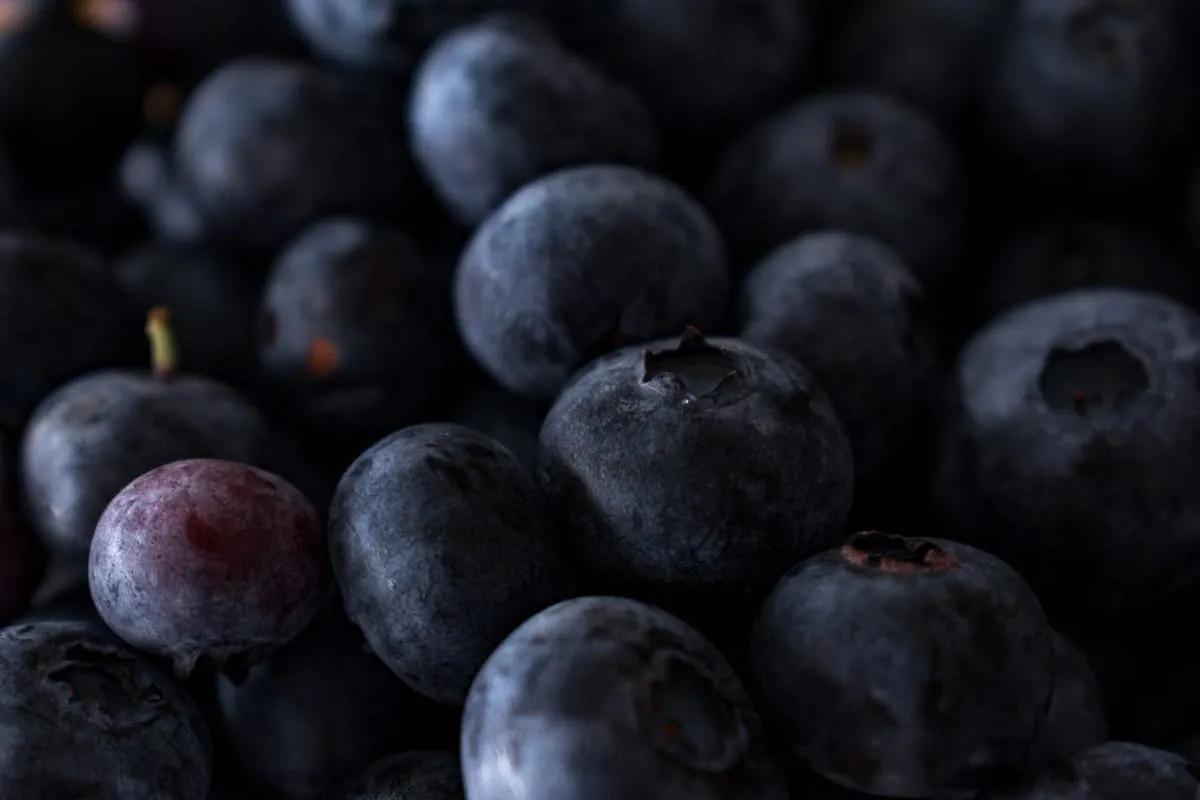
Yes, a small handful of plain, fresh blueberries is safe for most cats, but it is worth being honest about why this question looks different for a cat than it does for a person reaching for a genuine superfood. Cats are obligate carnivores built to thrive on meat, with no dietary need for fruit at all, and unlike us, they cannot even taste the sweetness that makes a blueberry appealing in the first place. A blueberry is not harmful to a cat. It is also not doing anything for it.
The short answer
A few fresh, whole blueberries are safe for the great majority of healthy cats. They are not toxic and there is no known danger in a cat eating one or two. What is worth knowing going in is that most cats show little genuine interest, since cats lack the taste receptor for sugar that makes fruit rewarding to us and to dogs. If your cat batted a blueberry across the kitchen floor and ate it out of curiosity, there is nothing to worry about. If your cat sniffs it once and walks away, that is the far more typical reaction.
Why cats do not get the same benefit we do
This is the part that separates blueberries for a cat from blueberries for a person, and it is worth understanding rather than assuming the fruit works the same way for both.
Blueberries are genuinely one of the more antioxidant-dense fruits available, which is exactly why they carry a reputation as a health food for people. Cats, though, evolved as strict carnivores, and their digestive systems are built around processing meat efficiently rather than extracting much value from plant matter. Antioxidants and fibre that do real work in a human diet largely pass through a cat without the same benefit, and cats also lost the taste receptor gene for sweetness somewhere in their evolutionary history, so the flavour that makes a blueberry a treat for us simply is not there for them. None of this makes the fruit dangerous. It just means offering blueberries is closer to letting a curious cat sample something safe than giving it anything resembling a nutritional boost.
How to serve it, if you offer any
If a cat seems genuinely curious, a little preparation keeps the small risks that do exist to a minimum.
Wash the berries and offer them whole or gently squashed, since a blueberry’s small, round shape is a modest choking risk for a cat inclined to swallow rather than chew, particularly in a kitten or a cat that gulps food quickly. One or two berries, offered occasionally rather than built into a routine, is genuinely plenty, there is no target amount to work up to because a cat has no nutritional need for them at all. Keep it plain fresh fruit only, with nothing added, and treat the whole exercise as letting a curious cat investigate something safe rather than offering a treat with any real value behind it.
What to skip
Fresh, plain blueberries are the only form worth considering, and everything blueberry-flavoured beyond that is better kept away from a cat.
Blueberry muffins, pie filling, and flavoured yoghurt carry added sugar a cat cannot properly taste and gets no benefit from, plus flour, butter, and often dairy that a fair number of adult cats handle poorly. Sugar-free baked goods and some flavoured yoghurts are a real concern, since a number are sweetened with xylitol, which is dangerous for cats the same way it is for dogs. When in doubt, the plain fresh berry, offered rarely, is the only version of “blueberry” that has any place near a cat’s bowl.
When it becomes a problem
A cat that eats a small handful of fresh blueberries is very unlikely to have any reaction at all. The more common issue comes from a cat getting into a larger quantity than intended, a punnet left on the counter and knocked to the floor, where the natural sugars and fibre can bring on a loose stool or a mild upset stomach that usually settles within a day on its own. Watch for repeated vomiting, diarrhoea that does not clear up, or a cat that seems properly unwell rather than just briefly off, and call your vet if you see any of that, or if you know a blueberry product containing xylitol, chocolate, or a significant amount of dairy was involved.
So, can cats eat blueberries? Yes, in a small amount of plain fresh fruit, though most cats will not see the appeal and there is no health reason to encourage them to. For the fuller picture of what is genuinely safe or worth avoiding, see our guide to which human foods are safe for cats, and for other specific fruits, our guides to strawberries, grapes and eggs.
Common questions
- Are blueberries good for cats the way they are for people?
- Not in any meaningful way. Blueberries are genuinely rich in antioxidants for us, but cats are obligate carnivores whose bodies are built to get what they need from meat, not plant compounds, and there is no evidence a cat gets a health boost from eating them. They are safe rather than beneficial, closer to a low-risk novelty than a superfood for a cat.
- Can kittens eat blueberries?
- A single small piece is not dangerous to a healthy kitten, but there is even less reason to offer one. Kittens have small stomachs and specific growth needs that a complete kitten food is formulated to meet, and filling any part of that up with fruit, even safe fruit, adds nothing useful. If you do offer a taste, keep it to a tiny amount and treat it as a one-off rather than a habit.
- My cat will not touch blueberries. Is that normal?
- Very normal, and in fact the more common response. Cats lack the taste receptor that detects sweetness, so a blueberry does not register as a treat the way it does for a person or a dog. Most cats sniff it, maybe bat it around the floor as a toy, and lose interest entirely, which says nothing bad about the fruit or the cat.
- Can cats eat blueberry muffins or blueberry yoghurt?
- Better to skip both. These are a different food entirely from fresh berries, carrying added sugar, flour, and often dairy that a fair number of adult cats digest poorly, plus butter or oil that adds unnecessary fat. Sugar-free versions sometimes use xylitol, which is genuinely dangerous for cats. If you want to offer blueberry at all, the whole fresh fruit on its own is the only version worth considering.