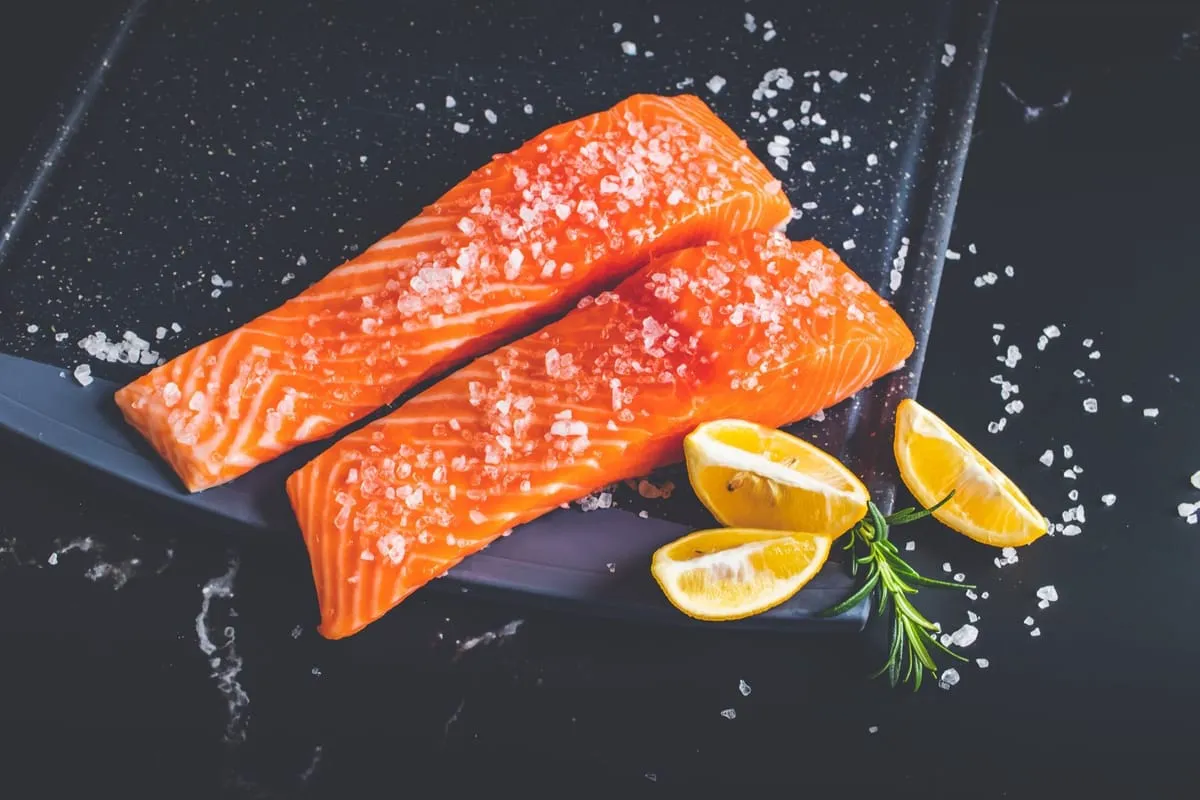
Yes, dogs can eat salmon, and plain cooked salmon is a genuinely good treat, high in protein and rich in the omega-3 fatty acids that support a dog’s skin, coat, and joints. But salmon carries one risk that people do not always know about, and it is a serious one: raw or undercooked salmon can cause salmon poisoning disease, a real illness that can kill an untreated dog. The rule that protects against it is simple. Cook the salmon through, every time, and salmon becomes one of the safer, more useful fish to share.
The short answer
Cooked, plain, boneless salmon in small amounts is a safe and nutritious treat for most dogs. It is not a complete diet on its own, and it comes with one firm rule that matters more than with almost any other food on this site: never raw.
Cooked only, and here is why that matters more than usual
Plenty of dog-safe foods carry a soft “cooked is better” recommendation. Salmon is different, and the reason is worth understanding rather than just following blindly.
This is why salmon, more than most human foods on this site, deserves a genuinely firm line rather than a general preference for cooking things. Farmed salmon and salmon from outside the affected river systems carry a lower risk, but there is no easy way to know a fillet’s exact origin once it is in your kitchen, and freezing at typical home-freezer temperatures does not reliably kill the parasite the way thorough cooking does. The safest, simplest rule is the one that costs nothing to follow: cook it properly, every time, no exceptions.
How to serve it
Bake, poach, or steam the salmon plain, with nothing added, no oil, butter, salt, garlic, or seasoning, until it is cooked through. Let it cool, then flake it apart and check carefully for any small bones before offering a piece. A few flakes mixed into a meal, or used as a training reward, is plenty for most dogs. If you would rather skip handling raw fish and cooking it yourself, a salmon oil supplement delivers the same omega-3 benefit for coat and joints with none of the raw-fish handling risk, and it is worth asking your vet whether one suits your dog.
Keep any skin you offer plain and cooked too, and treat it as an occasional extra rather than a regular addition, since it is considerably fattier than the flesh. Skip smoked salmon altogether. It is not cooked through in the way that kills the parasite, and it is usually heavily salted, which is not good for a dog in any quantity.
When it becomes a problem
Salmon causes problems in three main ways, and all three are avoidable. Raw or undercooked fish risks salmon poisoning disease, as covered above. Bones, even small ones, are a choking hazard and can cause internal injury if swallowed, so always check a piece thoroughly before it goes in the bowl. And too much salmon, cooked or not, adds unnecessary fat and calories on top of a complete diet, which can contribute to weight gain or an upset stomach in a dog that is not used to rich food.
So, can dogs eat salmon? Yes, plain cooked salmon is a safe, nutritious treat, but only cooked. Raw salmon is a genuine health risk, not just an inferior choice, so treat the cooking step as non-negotiable. For the wider picture of dog-safe and dog-dangerous foods, see our guide to safe foods for dogs.
Common questions
- Is salmon good for dogs?
- Plain cooked salmon is a genuinely good occasional treat, rich in high-quality protein and omega-3 fatty acids that support skin, coat, and joints. It is not a substitute for a complete dog food, so keep it as a topper or treat rather than a regular meal.
- Can dogs eat raw salmon?
- No, never feed a dog raw or undercooked salmon. Raw salmon, especially from Pacific Northwest rivers, can carry a parasite that causes salmon poisoning disease, a serious and potentially fatal illness in dogs. Cooking the salmon through kills the parasite, so salmon should always be served fully cooked.
- What is salmon poisoning disease?
- It is caused by a parasite carried in raw salmon and other fish from the same river systems, which in turn carries an organism that attacks a dog's gut and lymph nodes. Signs, vomiting, fever, diarrhea, and swollen lymph nodes, usually start within a week of eating raw fish. It is treatable with prompt vet care but can be fatal within about two weeks if it is missed, so any dog that has eaten raw salmon and starts to seem unwell needs a vet the same day.
- Can dogs eat salmon skin?
- A small piece of plain cooked, unseasoned skin is not toxic, but it is fatty and calorie-dense, so keep it to an occasional sliver rather than a regular addition. Avoid smoked or seasoned skin entirely, since the salt and seasoning used on smoked salmon are not good for dogs.