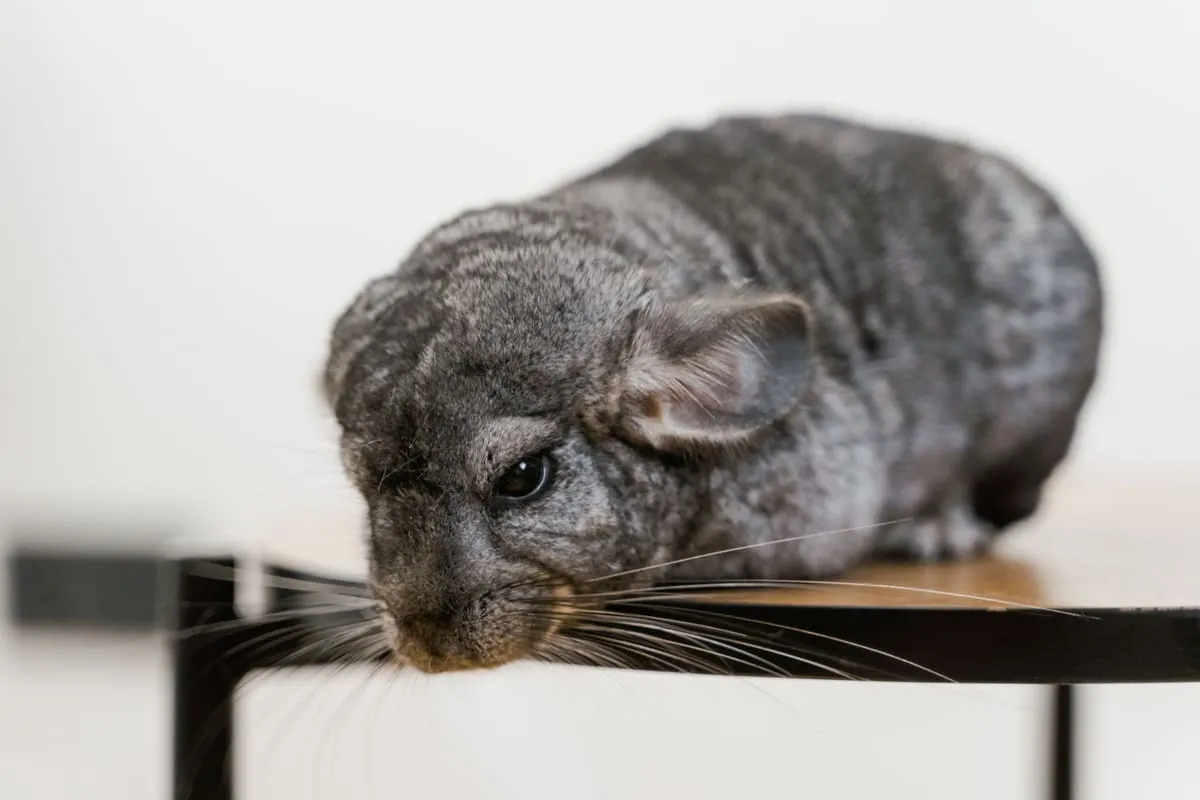
Chinchillas get sold, sometimes, on how soft they look, and that part is true, they have the densest fur of any land mammal, so fine it feels almost unreal. What gets glossed over is everything that comes with an animal built for a cold, dry mountain climate and then kept in an ordinary living room. Temperature control is not optional, water baths are actively harmful, and this is a long-lived, easily stressed animal rather than a low-effort alternative to a hamster. Kept properly, a chinchilla is a genuinely rewarding, characterful pet. Here is what that actually involves.
Temperature is the first thing to get right
More than diet, more than housing, temperature is the single factor that most often catches new chinchilla owners out, because the danger point is lower than most people expect.
Chinchillas evolved in the cool, dry Andes and their extremely dense coat has no efficient way to shed heat, which means a room that merely feels warm to a person, anything above roughly 75°F (24°C), can push a chinchilla into heatstroke. This is not a rare edge case in a hot climate, it is a real risk in an ordinary home during summer or near a sunny window, a radiator, or a poorly ventilated room. The fix is straightforward but non-negotiable: keep a chinchilla in the coolest, most stable part of the house, out of direct sun entirely, and watch for warm ears, rapid breathing, or lethargy on hot days as early warning signs that something needs to change immediately.
Dust baths, not water
The same dense coat that makes temperature such a risk also rules out the ordinary small-pet answer to hygiene.
Chinchilla fur is so fine and packed so tightly that water soaks in and struggles to dry back out, which can leave the coat damp and prone to fungal skin problems rather than clean. In the wild, chinchillas keep their coat in condition by rolling in fine volcanic dust, and a pet chinchilla needs the same thing, a proper chinchilla dust offered in a bath house a few times a week for ten to fifteen minutes at a time. Leaving dust available constantly tends to dry the skin out and make the fur greasy from overuse, so a scheduled routine works better than an always-on bowl.
Housing and the daily basics
A chinchilla’s cage needs to account for how active and vertical this animal actually is, not just how big it looks sitting still.
Multiple levels and platforms matter more than floor space alone, since chinchillas are agile jumpers that like to move up and around rather than across a flat floor. Solid or mesh-free flooring on at least the main resting level avoids the sore, injured feet that wire-bottom cages can cause over time. A chew-safe wooden hut gives a daytime hideout, since chinchillas are most active at dusk and through the night and appreciate somewhere dark and enclosed to retreat to during the day. Diet is built almost entirely around unlimited grass hay, the same fibre-first principle covered in why hay is the most important food, topped up with a modest daily portion of chinchilla-specific pellets formulated for their particular digestive needs, and fresh vegetables kept minimal and introduced carefully, since chinchillas are more prone to digestive upset from rich or sugary food than rabbits or guinea pigs.
Constant access to something to gnaw is essential too, chinchilla teeth grow continuously throughout life, and untrimmed, unworn teeth lead to the same painful dental problems seen in rabbits and guinea pigs. Safe wood, pumice, and chew blocks handle this if kept stocked and rotated so they stay interesting.
Handling and temperament
Chinchillas are quick, easily startled, and generally not built for being picked up and held the way a rabbit or guinea pig sometimes tolerates.
Most settle well with a patient owner who lets them come forward and explore a hand rather than reaching in and grabbing, and many become confidently interactive on their own terms over weeks of calm, low-pressure contact, following the same trust-building approach as any small prey animal in why small pets hide or nip. Fur slip, patches of fur releasing suddenly if grabbed too hard or startled badly, is a real defence mechanism worth knowing about before handling one, since it means a light, unhurried grip matters more with a chinchilla than with most small pets. This is not a pet that thrives on frequent cuddling, and expecting that from one is usually where the relationship goes wrong early on.
Lifespan and who they suit
Chinchillas commonly live 10 to 15 years, sometimes into their twenties, a genuine multi-decade commitment that outlasts most small pets by a wide margin and deserves the same seriousness as choosing a dog or cat.
A chinchilla suits someone who can keep a consistently cool room year-round, wants an active, entertaining pet to watch and gradually build trust with rather than one to cuddle on demand, and is prepared for a lifespan measured in over a decade rather than a couple of years. They are a poor fit for a hot climate without reliable air conditioning, a home wanting a hands-on pet for a young child, or anyone hoping for a low-maintenance alternative to a hamster, since between temperature control, dust baths, and the gnawing and jumping this animal needs to do daily, a chinchilla asks for more consistent effort than its reputation suggests.
Get the temperature and the dust baths right, and a chinchilla is one of the more distinctive, engaging small pets you can keep, alert, springy, and genuinely curious once it trusts you. Get either wrong and this is an animal that suffers quietly rather than tells you loudly, which is exactly why those two basics are worth taking seriously from day one.
Common questions
- Do chinchillas make good pets for children?
- Not usually as a hands-on, cuddly pet. Chinchillas are fast, easily startled, and generally do not enjoy being picked up or held for long, so they suit quiet observation and gentle interaction on their own terms far better than the kind of handling most children want. They can bond closely with a patient owner over time, but that owner is usually an adult or an older child who can respect the animal's pace.
- How hot is too hot for a chinchilla?
- Anything above about 75°F (24°C) is a real risk, and chinchillas can suffer fatal heatstroke well before a room feels uncomfortably warm to a person. Their dense fur, built for a cold mountain climate, has no efficient way to release heat, so a room that is merely warm for you can be dangerous for them. Keep them in the coolest, most stable part of the home and never in direct sun or near a heat source.
- Why do chinchillas need dust baths instead of water?
- Their fur is so dense that water soaks in and struggles to dry out fully, which can lead to fungal skin problems and a chilled, damp coat. A special fine volcanic dust, offered a few times a week in a container the chinchilla can roll around in, absorbs oil and keeps the coat in condition the way it would in the wild. A wet bath is not a gentler alternative here, it is the wrong tool entirely.
- How long do chinchillas live?
- Commonly 10 to 15 years, and sometimes into their twenties with excellent care, considerably longer than most small pets people compare them to. That is a genuine multi-decade commitment for some owners, closer in length to a dog or cat than to a hamster or gerbil, and it is worth weighing seriously before bringing one home.