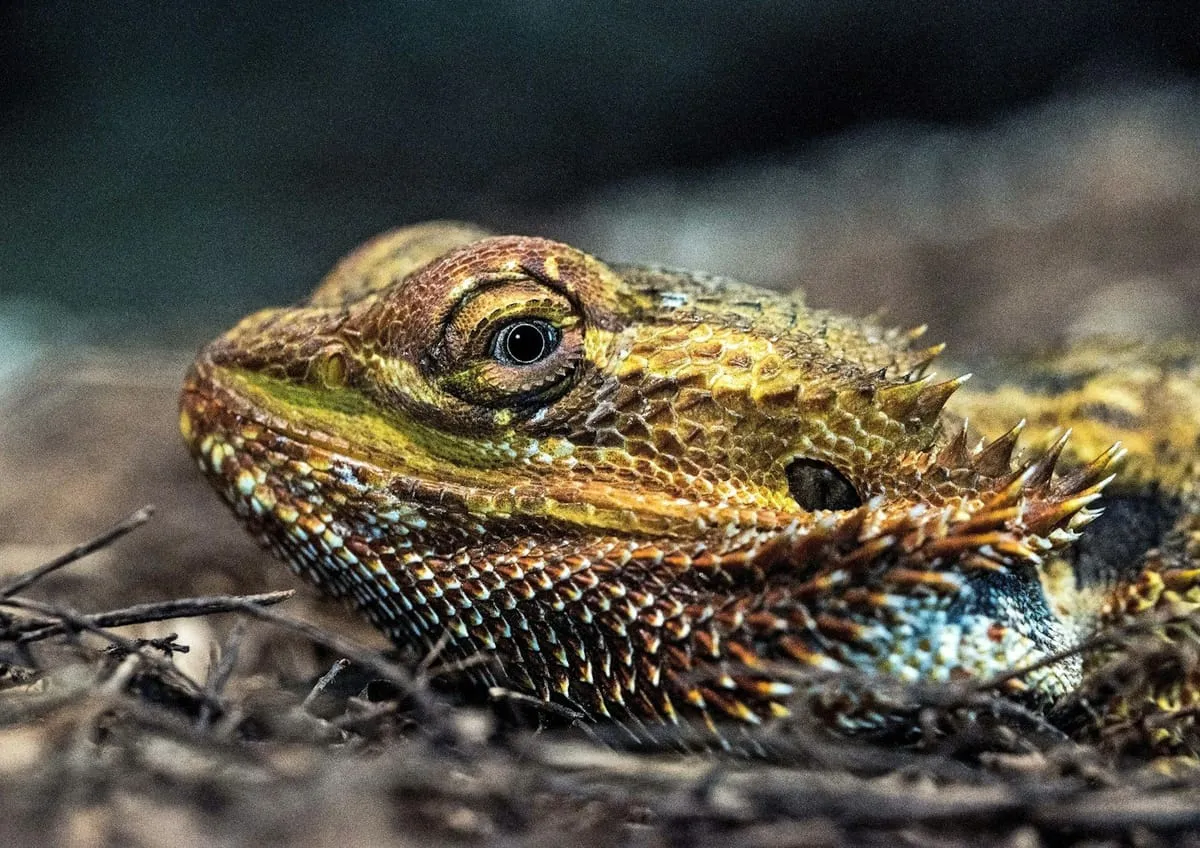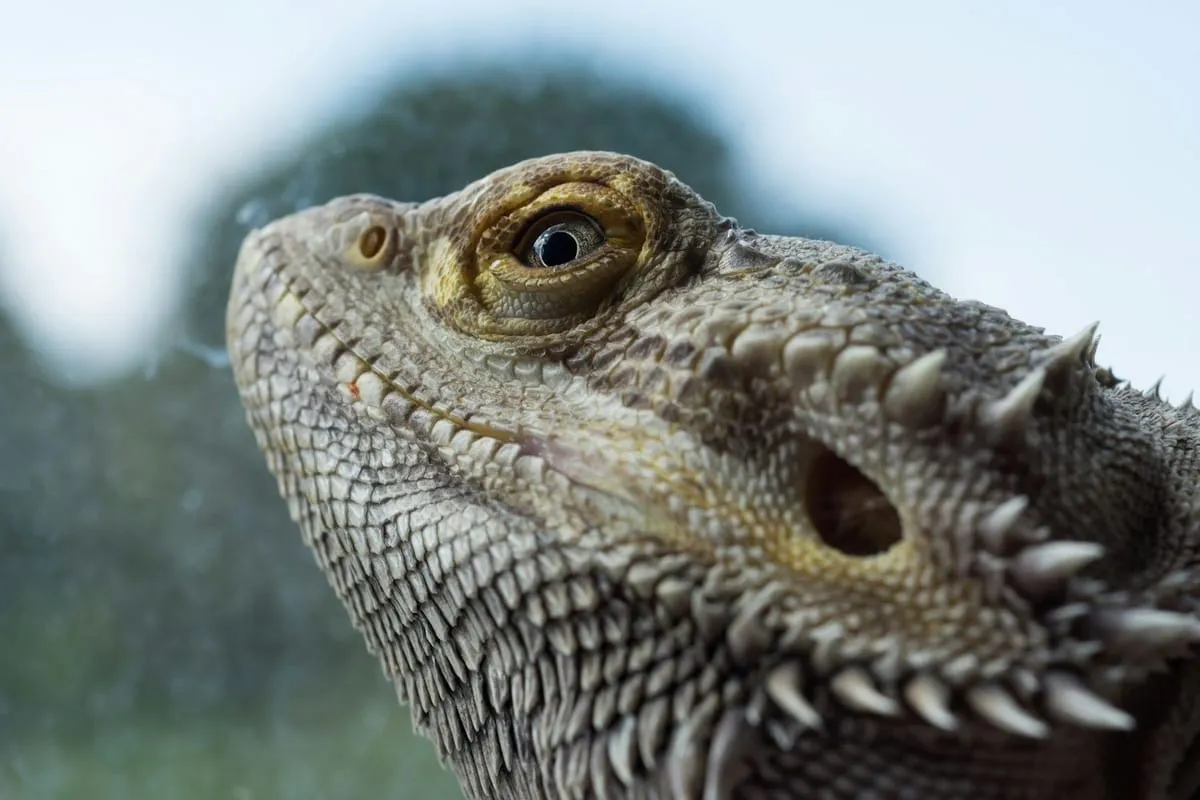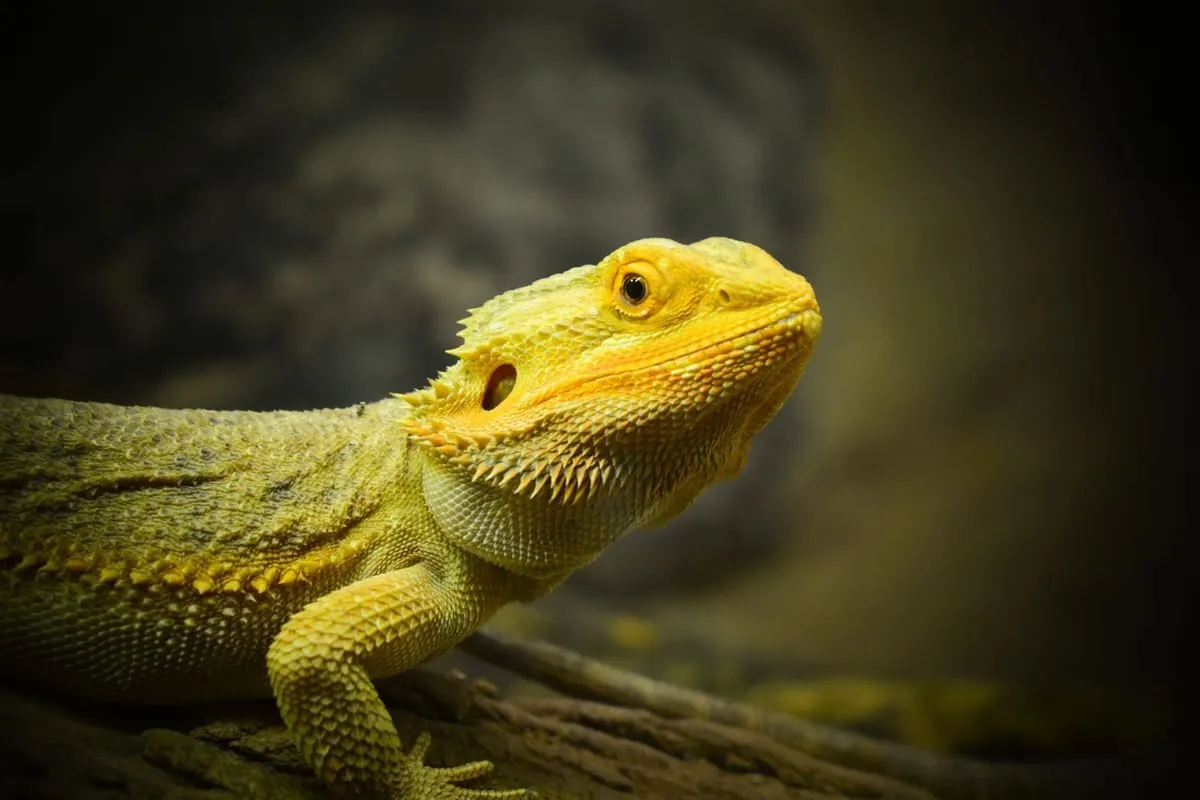
A bearded dragon’s beard turning black is one of the first things that alarms a new keeper, usually because it looks like the healthy tan or gold dragon in the tank has been replaced overnight by something angry and sick-looking. In the great majority of cases nothing is wrong. Colour change is one of the main ways a bearded dragon communicates, both with its owner and with its own environment, and reading it correctly means knowing which of a small handful of causes is actually behind it.
Thermoregulation, the most common cause
A cold dragon darkens on purpose, because dark skin absorbs heat faster than pale skin.
This is why a black beard, or an all-over darkening across the back and beard together, shows up most reliably first thing in the morning before a dragon has properly warmed under its basking light. It is doing exactly what it would do in the wild, using colour to speed up the process of reaching a working body temperature. Once the dragon has basked long enough to warm through, the colour lifts back to its normal tan, gold, or orange, often within thirty minutes to an hour.
Stress and the defensive black beard
Puffed and black is a warning, and it is aimed at something specific.
A bearded dragon that flattens its body, puffs out its throat, and turns the beard black is displaying to a perceived threat, a dog or cat that has wandered too close, an unfamiliar person, being picked up in a way it does not like, or its own reflection mistaken for a rival dragon in a glass tank wall. This display is entirely normal and settles once the trigger is removed. A dragon that displays constantly at its own reflection, though, is worth a fix at the enclosure rather than the animal, since it is reading a rival that is never actually going away.
Social and hormonal darkening
Beard colour also does social work between dragons, and hormones play a part too.
Male dragons in particular can darken and beard around another dragon, whether that is real rivalry through the glass of a neighbouring enclosure or, again, a reflection. Breeding season can bring on more frequent darkening and head-bobbing displays even without another dragon in sight, driven by seasonal hormone shifts rather than anything wrong. None of this needs treatment, though two dragons that beard and posture at each other through shared glass are better kept out of each other’s line of sight, since ongoing display stress is not restful for either animal.
Brumation, the seasonal slowdown
Long-lasting darkness paired with slowing down is usually the approach of brumation, a bearded dragon’s winter-like dormant period, rather than illness.
As the trigger builds, typically cooler ambient temperatures or a shortening day length, a dragon heading into brumation often darkens for days at a time, spends longer buried or hidden, eats less, and becomes noticeably less active. This is a normal seasonal process in adult dragons and does not need a vet on its own, though a young dragon under a year old showing the same pattern is worth checking over, since true brumation is unusual that early and a vet visit rules out illness masquerading as it.
Reading the pattern
A beard that flashes black for a few minutes around a dog walking past, or a body that darkens every morning and pales out once the lamp has been on a while, is a dragon doing exactly what its biology expects it to do. Darkness that lingers for days, especially alongside reduced eating, low energy that basking does not fix, or a firm belly, is the pattern that belongs with a vet rather than a wait-and-see approach. Most of what your dragon’s colour is telling you sits in the first group. For the fuller picture of how a bearded dragon communicates through posture as well as colour, see what your reptile’s behaviour is telling you, and for the basics of keeping one well in the first place, see the bearded dragon care guide.
Common questions
- Is it normal for a bearded dragon's beard to turn black?
- Yes, in short bursts it is one of the most normal things a bearded dragon does. A black beard first thing in the morning, during handling, around another dragon, or near a mirror or reflective glass is almost always thermoregulation, stress, or a social display, and it usually fades back to normal within an hour or two once the trigger is gone.
- Why does my bearded dragon's whole body turn dark, not just the beard?
- Whole-body darkening is a different, and separate, colour change from a black beard and it is mostly about heat. Dark skin absorbs more warmth from a basking lamp, so a cold dragon, or one basking first thing in the day, will often darken all over and pale back out again once it has warmed through. A dragon that stays dark for days and is also sluggish and off its food is more likely heading into brumation, its winter-like slowdown, rather than simply warming up.
- Can stress alone turn a bearded dragon black?
- Yes. A puffed, black beard is the classic defensive display, aimed at a perceived threat such as a dog, a new person, an unfamiliar handling position, or its own reflection in glass. It is a warning rather than a medical sign, and it settles once the dragon feels safe again, though a dragon that displays constantly in its own enclosure is worth a change of setup, such as covering a reflective glass wall.
- When should a black or dark bearded dragon see a vet?
- See an exotics vet if darkening lasts for days rather than clearing within a day, or comes with reduced appetite that goes on for more than a couple of weeks outside a normal seasonal slowdown, weight loss, lethargy that does not lift with correct basking temperatures, or an unusually swollen or hard belly. Those combinations point past ordinary thermoregulation, stress, or brumation toward something that needs checking properly.