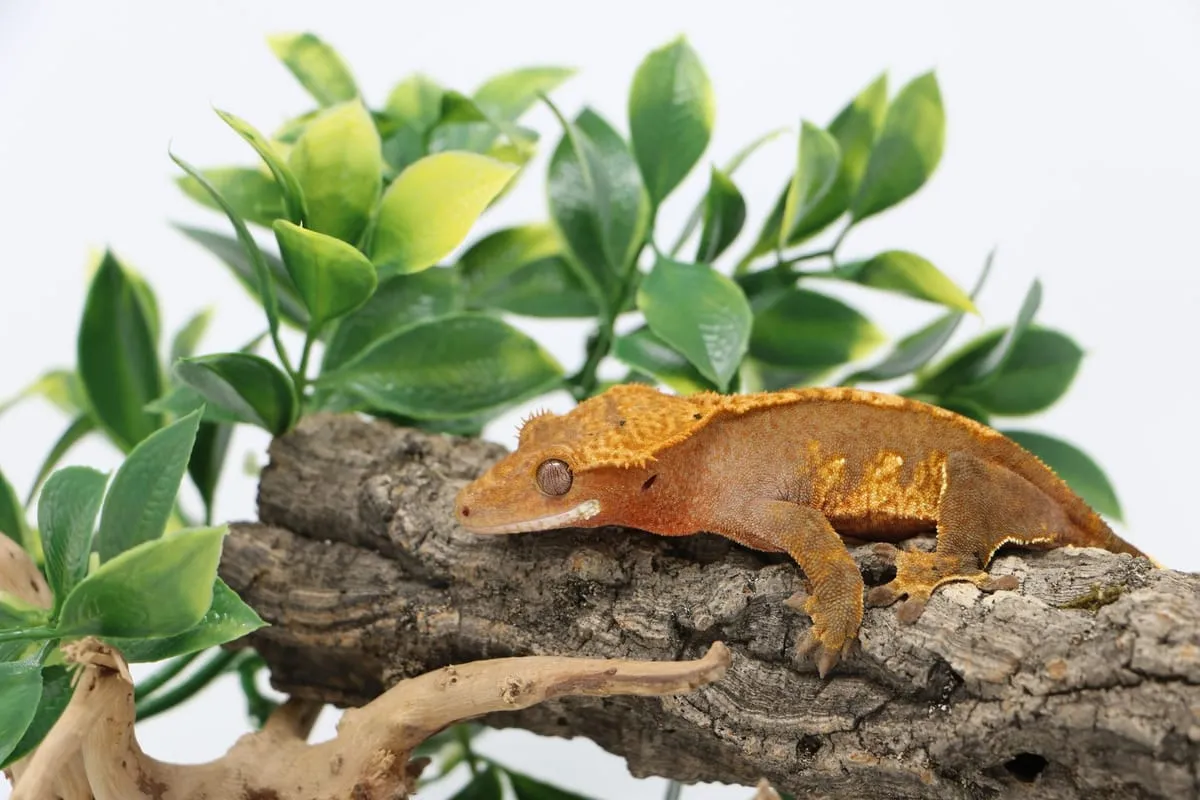
The crested gecko sits alongside the leopard gecko as one of the two reptiles most often pointed at when someone asks for a good first reptile, and for real reasons: it is calm, generally easy to feed, and forgiving of a careful beginner’s learning curve. What catches people out is assuming a second gecko means a similar setup to the first. A crested gecko is an arboreal, humidity-loving animal from a cooler, damper environment than a leopard gecko, and getting the heat wrong in the direction that seems intuitive, treating it like a typical warm desert reptile, is one of the most common mistakes new keepers make with this species.
Why they suit beginners, with one real caveat
The case for a crested gecko as a first reptile holds up, but it is worth being specific about where it differs from other easy species.
They are generally calm and food-motivated, do not require the strong basking heat that makes some reptile setups more demanding, and their care, humidity, feeding and enclosure needs, is well documented online and in care sheets, so reliable information is not hard to find. Many keepers also find their appearance and personality genuinely appealing, with their crested brows and alert, climbing nature giving them more visible character than some ground-dwelling species. The caveat is that “easy” here means well understood, not identical to other beginner reptiles. A crested gecko kept in a hot, dry leopard gecko style setup will overheat and struggle, so it is worth reading this species’ specific needs rather than assuming beginner reptile care is one-size-fits-all.
What a crested gecko needs
Getting a crested gecko’s environment right means working against the instinct that reptiles generally need strong heat, because this species is a genuine exception.
Crested geckos come from cooler, humid forest habitats in New Caledonia, and critically, they are one of the reptiles most sensitive to overheating. Room temperature, roughly the high 60s to mid 70s Fahrenheit, is often close to correct, and a strong heat source or a room that gets hot in summer is a real danger rather than a comfort, since sustained heat above the mid 80s Fahrenheit can be fatal. This is the opposite of species that need a hot basking spot, and it is the single most important thing to get right, tying into the wider point that heat needs vary hugely by species. Alongside that, they need a tall, plant-filled enclosure they can climb rather than a ground-level setup, since they are arboreal and spend most of their time off the floor. Humidity needs to be kept up with regular misting, and a day-night cycle with a light source, plus low-level UVB as current best practice, rounds out the setup. All of it should be running correctly before the gecko arrives, the same rule as for any reptile.
Feeding
Feeding a crested gecko is refreshingly simple compared with an insect-only species, which is part of why they suit a beginner well.
Most keepers feed a complete commercial crested gecko diet powder, mixed with water into a paste and offered a few times a week, which many geckos take to readily and which covers their nutritional needs on its own. Offering occasional live insects such as appropriately sized crickets or roaches on top is a nice source of enrichment and hunting behaviour, but it is not required the way live prey is for a strictly insectivorous reptile. This makes the day-to-day feeding routine considerably less involved than species relying entirely on gut-loaded, supplemented insects, though the wider principles of correct supplementation and feeding still matter and are worth understanding properly in our guide to feeding your reptile the right diet and supplements.
Handling and temperament
Crested geckos are generally tolerant of gentle handling once settled, but there is a specific risk worth knowing about before you pick one up.
They are active, quick, and good jumpers, so handling over a soft, enclosed surface reduces the risk and impact of an unexpected leap. More importantly, like many geckos they can drop their tail as a stress or defence response if grabbed roughly or by the tail itself, and unlike a leopard gecko’s tail, a crested gecko’s does not grow back. The loss causes no lasting harm to the animal, cresteds live full lives without a tail, but it is permanent and avoidable, so handle low, gently, and never by the tail. Beyond that, most settled crested geckos tolerate calm, regular handling reasonably well, though like any reptile they are better described as interesting to observe and gently interact with than as a cuddly pet.
Is it right for you
The final honest question is whether this particular gecko, rather than reptile keeping in general, suits you.
If you can provide a cooler, humid, climbable setup rather than a hot dry one, keep up with regular misting, and are comfortable with an animal that is more active at night and better handled gently than cuddled, a crested gecko is a genuinely good first reptile. Weigh it against a leopard gecko honestly, both are commonly recommended for real reasons, but they want close to opposite environments, so the right choice depends on which setup and which kind of animal genuinely appeals to you, not just which one sounds easier. See our leopard gecko care guide alongside this one if you are deciding between the two.
Done properly, a crested gecko is one of the more forgiving and rewarding reptiles a careful beginner can start with, calm, characterful, and straightforward to feed. The setup just runs in the opposite direction from what most people expect a reptile to need, cool and humid rather than hot and dry, and getting that the right way round from day one is what separates a thriving crested gecko from a struggling one.
Common questions
- Are crested geckos good for beginners?
- Yes, they are one of the most commonly recommended first reptiles, alongside the leopard gecko. They are calm, generally food-motivated, and their care needs are well understood, though it is worth knowing their setup, an arboreal, humid enclosure with no strong heat source, is quite different from a leopard gecko's warm, dry, ground-level one. Read up on the specific setup rather than assuming all beginner geckos are kept the same way.
- Do crested geckos need UVB lighting?
- It is not strictly required the way it is for a basking species, but a low level of UVB is now widely recommended as good practice, since it supports natural vitamin D3 production even in a species that gets much of its D3 from supplements. A weak, appropriately shaded UVB tube alongside correct supplementation is the current best-practice approach.
- What do crested geckos eat?
- Mostly a commercial crested gecko diet powder mixed with water, which is a complete, balanced food many keepers use as the entire diet. Offering occasional live insects such as small crickets or roaches on top adds enrichment and is fine, but is not required if the powdered diet is fed consistently and correctly.
- Why did my crested gecko drop its tail, and will it grow back?
- Crested geckos can drop their tail as a stress or defence response, usually from rough handling, a fall, or being grabbed near the tail. Unlike a leopard gecko, a crested gecko's tail does not grow back, so the loss is permanent, though it causes no lasting harm to the gecko beyond the tail itself. Handle gently, low over a soft surface, and never by the tail, to avoid this.