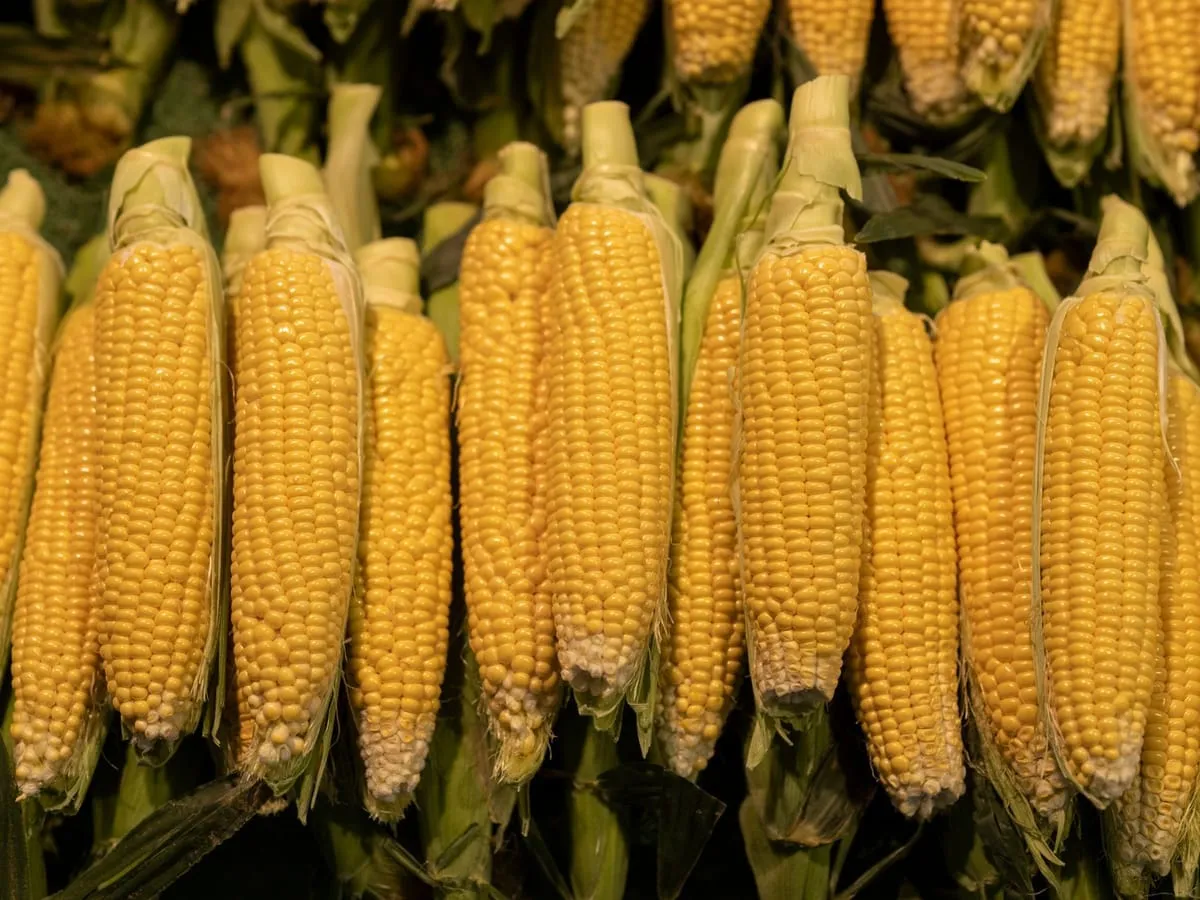
Yes, dogs can eat corn, and plain kernels are one of the more ordinary, low-risk treats out there, the kind of thing that ends up in a lot of complete dog foods already. The part that actually causes trouble is not the kernels. It is the cob, which a dog cannot digest and which vets see lodged in dogs’ guts often enough that it has its own reputation among emergency clinics every summer barbecue season.
The short answer
Plain corn kernels, cooked or raw, with nothing added, are safe for most dogs in small amounts. Corn is a reasonably digestible carbohydrate and a source of fibre and a few vitamins, though it is not adding anything a complete dog food is not already providing. The cob is a different matter entirely and should never be given to a dog on purpose, and kept out of reach if it ends up on a plate, a plant, or in a bin your dog can get into.
How much is safe
A spoonful of plain kernels mixed into a meal, or a few offered as a treat, is plenty for most dogs. Corn is filling and starchy rather than nutritionally necessary, so it earns the same small-portion treatment as any other treat food, roughly a tenth of a dog’s daily food at most, with the rest coming from a complete, balanced diet. A dog with a sensitive stomach or a tendency to gain weight easily is better off with a smaller amount or none, since too much at once can cause a loose stool even without any allergy involved.
How to serve it
Cut or scrape the kernels off the cob and offer them plain, with no butter, salt, or seasoning, whether the corn is fresh, cooked, or frozen and thawed. Raw kernels are fine for most dogs, though lightly cooked and cooled kernels are a little easier to chew and digest for an older dog or a small breed. A few plain kernels stirred through a regular meal work just as well as a stand-alone treat, and there is no real advantage to feeding corn on its own.
When it becomes a problem
The cob is the main danger, not the kernels. A whole or partially chewed cob is dense and fibrous, it does not soften or break down in a dog’s stomach, and its size means it can pass out of the stomach and then get stuck further down the intestine, where it blocks food and fluid from moving through. That is a surgical emergency in the large majority of cases, not something that resolves on its own. Beyond the cob, plain kernels rarely cause a problem on their own, though a large amount at once can bring on a loose stool or mild stomach upset in any dog, and a dog with a genuine corn sensitivity, uncommon but real, may show itching or digestive upset that repeats every time corn is on the menu.
What to do if they had too much
A dog that gets into a bowl of plain kernels will most likely be fine, with at most a softer stool for a day that settles on its own. A dog that has swallowed a cob, or you suspect might have, needs a different response entirely. Call your vet straight away, even before you see symptoms, since a blockage can take hours to show itself and gets more dangerous the longer it sits. Watch for repeated vomiting, straining without producing anything, a swollen or painful abdomen, going off food, or restlessness and obvious discomfort, and treat any of those as an emergency rather than something to monitor overnight. Our guide to the signs your dog is in pain is worth a read if you are not sure what you are looking at.
So, can dogs eat corn? Yes, plain kernels in small amounts are an easy, low-risk treat. The cob is the real hazard, keep it off the table, out of the bin, and away from a dog entirely. For the wider picture of what dogs can and cannot safely eat, see our guide to safe and toxic foods for dogs, and for another food where the hard, inedible part is the real risk, our guide to popcorn.
Common questions
- Can dogs eat corn on the cob?
- No, never give a dog the cob itself, only the kernels off it. The cob does not break down in a dog's stomach the way food is supposed to, and it is roughly the wrong size and shape to pass through a dog's gut on its own, which makes it one of the most common causes of a surgical intestinal blockage in dogs of any size.
- Is corn a common allergy trigger for dogs?
- Less often than people assume. Corn gets blamed a lot in pet food marketing, but a genuine corn allergy is uncommon compared to proteins like chicken or beef, and most dogs digest plain corn kernels without any issue. If you do notice itching, ear infections, or loose stools that line up with corn specifically, mention it to your vet rather than self-diagnosing from a bag of kibble.
- Can puppies eat corn?
- A few plain kernels are fine as an occasional treat once a puppy is eating solid food, but the cob is even riskier for a puppy than for an adult dog. A puppy's gut is narrower and a blockage can become dangerous faster, so keep cobs, including ones fished out of the bin, well out of reach.
- Is canned or creamed corn okay for dogs?
- Plain canned corn with no salt added is a reasonable occasional substitute for fresh, but check the label, since many canned corn products carry more sodium than you would expect. Creamed corn is a poor choice regardless, it is usually built on butter, cream, and added sugar, none of which a dog needs.