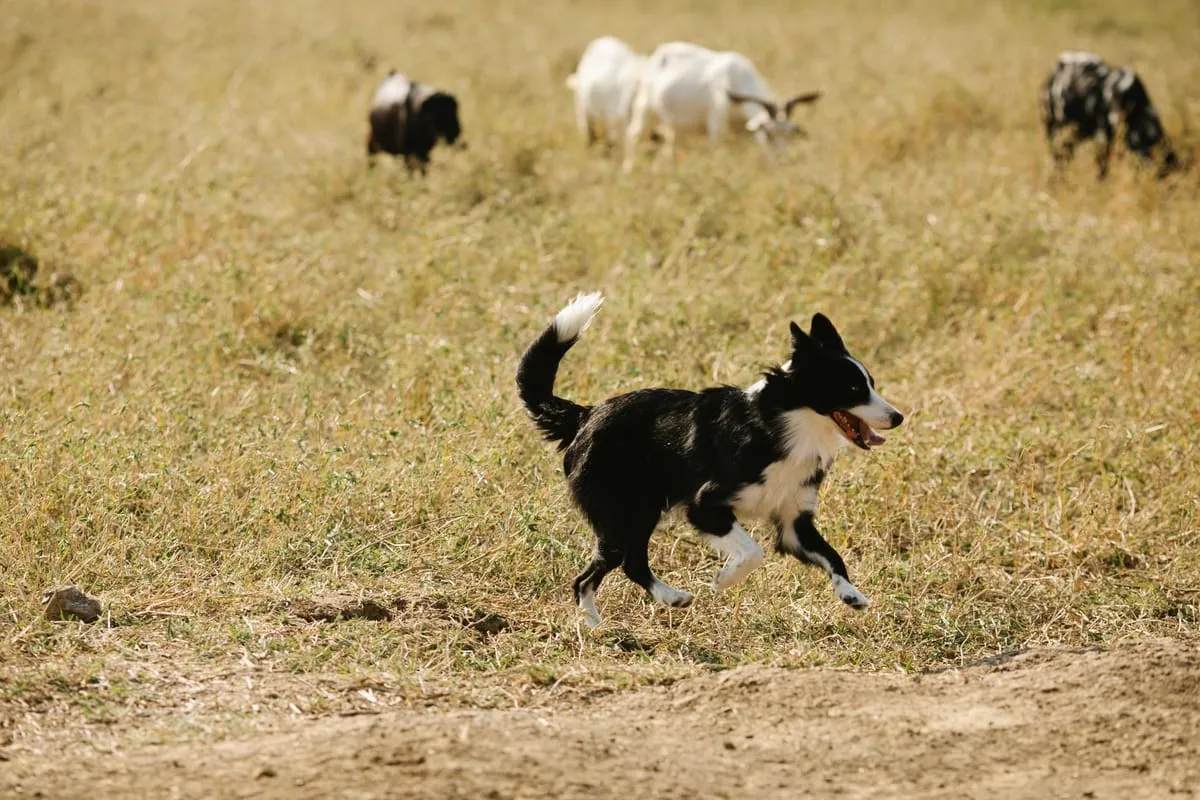
Ask around and someone will tell you the Border Collie is the smartest dog breed there is, usually as if that settles the matter in the dog’s favour. It does not. A Border Collie was bred for one job, gathering and controlling livestock across open ground all day, and that job is a specific, intense, almost obsessive kind of intelligence, not a general one. Put that brain in a house with no sheep and no work and it does not switch off. It finds a job of its own, and the job it picks is rarely one an owner would have chosen. This is the honest version of what living with that drive actually involves.
Temperament: bred to control movement, not to relax
The trait that defines a Border Collie is not affection or obedience, though most have plenty of both. It is an intense focus on movement, sometimes called “the eye,” the low, fixed stare a Collie uses to freeze and steer a flock without a single bark.
That stare and that drive do not know the difference between sheep and anything else that moves. Cars, bicycles, joggers, running children, and the family cat can all trigger the same gathering instinct, which is why so many Collie owners end up managing a dog that nips at heels or tries to herd anything moving fast. It is not aggression and it is rarely trained in on purpose, it is the breed’s core job showing up with nothing appropriate to do it to. The same intensity shows in a fixed, unblinking stare directed at their owner, which in a Collie is often this exact herding focus rather than a request for food or attention. Recognising that this behaviour is instinct, not naughtiness, is the first step to redirecting it into something safe.
Exercise is the easy half of the equation
Everyone tells a prospective Collie owner about the exercise. Fewer mention that the exercise is not actually the hard part.
A Border Collie’s body tires fairly predictably: a couple of hours of real running, fetch, or off-lead activity a day covers most adults, more for a young, fit dog with stock-dog lines behind it. The part people underestimate is the mental load. A Collie that gets its legs tired and nothing else tends to come home just as wound up as it left, because the drive to work has not actually been used, only the energy has been burned. Structured training, scent games, a puzzle feeder that turns dinner into a problem to solve, and sport outlets like agility or flyball give that working brain the actual job it is asking for. A tired body and an unused brain is a genuinely bad combination in this breed, and it is where a lot of the obsessive, hard-to-live-with behaviour people associate with Collies actually comes from.
Trainability cuts both ways
Border Collies are consistently ranked at the top of trainability studies, and that reputation is well earned. Most learn a new cue in a handful of repetitions and genuinely enjoy the process of working something out.
That speed is a real asset with consistent, reward-based training and a clicker to mark the exact right moment, since a Collie that understands quickly also gets bored of repetition quickly and needs new problems, not the same ten cues drilled forever. The flip side is that this is not a forgiving breed to under-train. A Collie left without structure does not sit quietly with its lack of a job, it invents one, and the ones dogs invent for themselves, obsessively chasing shadows or light reflections, herding the children, fixating on a single toy or task, are considerably harder to live with than anything a person would have taught on purpose.
Health, honestly
Alongside temperament, a handful of health issues are common enough in the breed to ask a breeder about directly rather than assume away.
Hip dysplasia, a poor fit in the hip joint that can lead to arthritis, affects working and sporting breeds including Collies, and reputable breeders should be able to show hip scores for both parents. Collie eye anomaly is an inherited condition affecting the back of the eye, ranging from barely noticeable to seriously sight-affecting, and it is specific enough to the breed that it carries the breed’s name. Epilepsy also shows up in Border Collies more than in many breeds, and while it is manageable with medication, it is a lifelong condition to go in aware of.
Who they suit, and who they do not
A Border Collie suits people who genuinely want to spend a large part of their day training, playing, or working the dog, not just walking it, and who find that kind of engagement rewarding rather than exhausting. They do particularly well with owners interested in a dog sport, since agility, flyball, and herding trials give the breed a legitimate, structured outlet for exactly the drive that causes trouble when it has nowhere to go. They are a poor match for a household that is out at work all day with no plan for the hours in between, for first-time owners without a clear picture of what daily mental work actually looks like, and for anyone who wants a dog that will happily do nothing much on a quiet weekend.
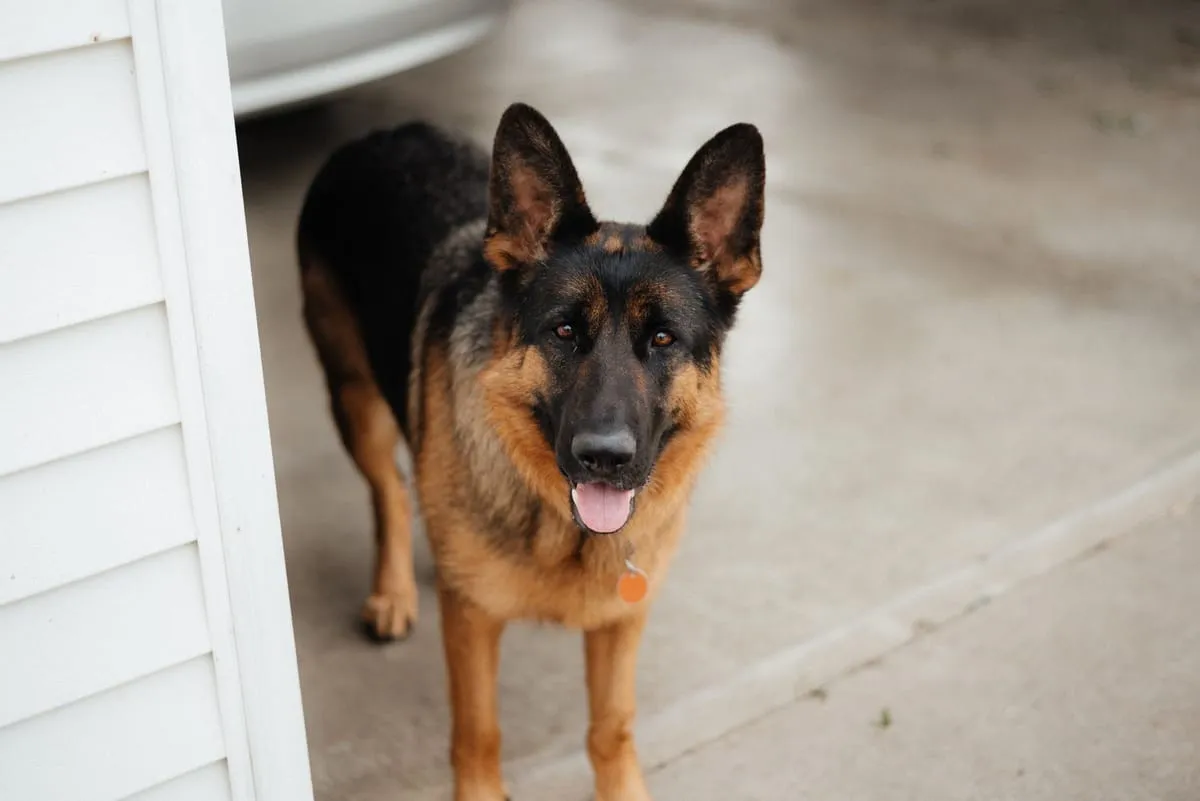
Get the outlet right, mental work alongside the physical, consistent training, and an honest read of the drive rather than a fight against it, and a Border Collie is about as rewarding a dog as exists, genuinely tuned in to its person in a way few breeds match. Get it wrong and the same intelligence that makes the breed remarkable becomes the reason it ends up back in rescue. If you are still weighing whether a breed this demanding fits your life, our wider guide to choosing the right dog for your life is a useful next stop, and for a sense of how a working-line temperament compares with another high-drive breed, see our guide to the German Shepherd.
Common questions
- Are Border Collies good family pets?
- For the right family, yes, but the herding instinct needs managing around small children the same way it does around sheep. A Collie that has not been taught otherwise may nip at heels or try to circle and control running kids, not out of aggression but because chasing and gathering movement is exactly what it was bred to do. Families who supervise, redirect that instinct into games, and give the dog a real daily job tend to do well. Families hoping for a calm dog that naps most of the day usually do not.
- How much exercise does a Border Collie actually need?
- More than most people budget for, and the physical side is only half of it. A couple of hours of real activity a day is a reasonable baseline for an adult, but a Border Collie that only gets its legs tired and not its brain tends to stay wound up regardless of the mileage. Training sessions, scent work, and problem-solving toys need to sit alongside the running, not after it.
- What health problems are Border Collies prone to?
- Hip dysplasia and collie eye anomaly, an inherited condition affecting the back of the eye, are the two to ask a breeder about directly, alongside epilepsy, which shows up in the breed more than most. Many Border Collies also carry the MDR1 gene mutation, which makes them abnormally sensitive to certain common drugs, including some flea and worming treatments, so always tell your vet you own a Collie before anything new is prescribed.
- Is a Border Collie a good first dog?
- Usually not. The breed is forgiving of training mistakes because it is so quick to learn, but it is unforgiving of an under-stimulated life, and a bored, under-exercised Collie tends to develop the exact obsessive or reactive habits that make people give the breed up. First-time owners who fall for one are better off going in with a serious plan for daily mental work, or looking at a calmer breed instead.