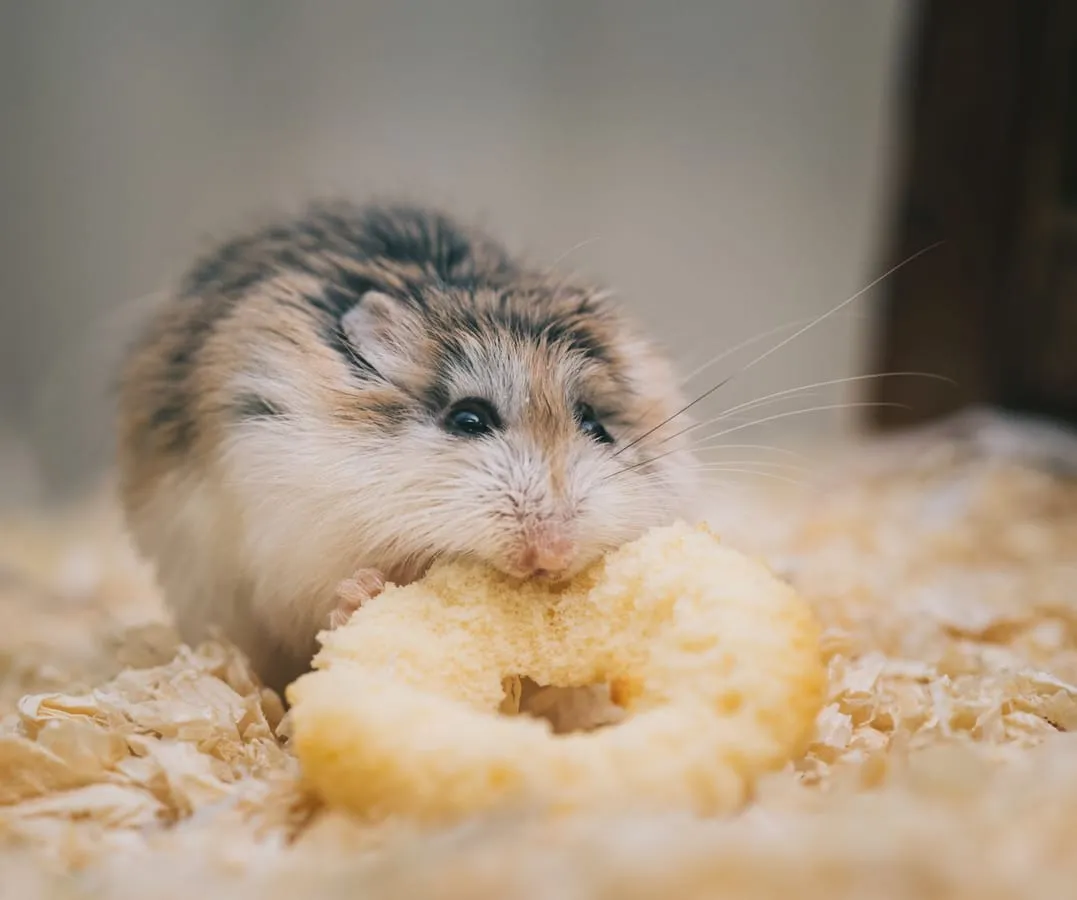
Hamster food often gets treated as a solved problem, pour the bag of mix into the bowl and move on, but a hamster’s diet is a bit more layered than that. A good commercial hamster mix or pellet should do the bulk of the nutritional work, and fresh food is genuinely useful alongside it, for variety, enrichment, and a few extra nutrients. The trouble is that hamsters are small, and a food that is a minor issue for a rabbit or guinea pig can be a real problem for an animal this size, so it is worth knowing specifically what is safe, what is not, and how much is sensible.
The base diet does the heavy lifting
Before getting into extras, it matters where fresh food actually sits in a hamster’s overall diet.
A good-quality commercial hamster and gerbil mix, formulated for the species, should make up the large majority of what a hamster eats day to day, since it is balanced for a hamster’s specific nutritional needs in a way that fresh food alone is not, alongside the wider husbandry set out in our Syrian hamster care guide. Fresh vegetables, fruit, and the occasional protein treat sit on top of that base as additions that add variety and enrichment, not as a replacement for it. This is worth being clear about because it is easy to get carried away offering fresh food, since hamsters clearly enjoy it and forage for it enthusiastically, but the foundation still needs to be the properly formulated mix, with fresh extras kept to small, occasional amounts.
What is genuinely safe
With that foundation in place, a decent range of fresh foods can be offered safely in small quantities.
Vegetables like carrot, cucumber, broccoli, and a small amount of leafy greens are generally well tolerated, and fruit such as apple with the seeds removed, banana, and berries can be offered occasionally as a treat. Some hamster owners also offer small amounts of plain cooked egg, mealworms, or plain cooked chicken as an occasional protein boost, since hamsters are omnivores in the wild rather than pure herbivores, and tucking a piece into a treat holder is a good use of the foraging instinct covered in stopping a small pet getting bored. The key word throughout is small: a hamster is a tiny animal, so a “small piece” genuinely means a small piece, not a chunk sized for a rabbit, and any new food should be introduced gradually so you can watch how the hamster handles it.
What to avoid
Just as important is the list of foods that are genuinely unsafe, and a few of these are worth remembering specifically.
Onion, garlic, and citrus fruit can all cause digestive upset or worse, and raw kidney beans contain a compound that is toxic to hamsters. Chocolate is a real danger, the same as it is for dogs, and should never be given. Sugary, salty, or heavily processed human snacks offer nothing nutritionally and can cause genuine harm in an animal this small, and almonds are also best avoided. One less obvious hazard is anything sticky fed in too large an amount, such as a big blob of peanut butter, since it can become lodged in a hamster’s cheek pouches, which is uncomfortable and can lead to infection if it is not cleared.
Feeding it sensibly
Put together, feeding a hamster well is mostly about proportion and restraint rather than complexity.
Keep a good commercial hamster mix as the daily foundation, add small, occasional pieces of the safe fresh foods for variety and enrichment, avoid the specific foods known to be dangerous, and check cage stashes regularly for anything going mouldy. It helps to remember that cheek-stuffing and hoarding are completely normal hamster behaviour rather than something to worry about, and that the animal’s small size is exactly why portions of anything extra should stay modest. A hamster fed this way gets the balanced nutrition it needs from its base diet, plus the genuine enjoyment of foraging for and hoarding the occasional fresh treat.
None of this needs to be complicated. A proper hamster mix as the staple, a careful and modest rotation of safe fresh extras, and a clear mental list of what never goes in the bowl covers almost every real feeding decision a hamster owner will face, and it is a small amount of care for an animal that clearly gets a great deal of enjoyment out of its food.
Common questions
- What fresh foods can hamsters eat?
- Small amounts of foods like carrot, cucumber, broccoli, apple without seeds, and banana work well as occasional additions, alongside a good-quality commercial hamster mix that should stay the bulk of the diet. Introduce anything new gradually and in a genuinely small piece.
- What foods are dangerous for hamsters?
- Onion, garlic, citrus fruit, raw kidney beans, chocolate, sugary or salty human snacks, and almonds are all unsafe. Chocolate is particularly dangerous. Anything sticky like peanut butter fed in a large lump is also a real risk, since it can lodge in a hamster's cheek pouches.
- Can hamsters eat human food?
- A little, and only the safe items in small amounts, but a hamster's diet should be built around a proper commercial hamster mix rather than human leftovers. Treat human food as an occasional, tiny addition, not a substitute for a balanced hamster-specific diet.
- Why is my hamster storing food in its cheeks?
- This is completely normal hamster behaviour, not a sign of a problem. Hamsters are natural hoarders that carry food in their cheek pouches back to a stash in their bedding. It only becomes a concern if a cheek pouch looks stuck, swollen, or lopsided, which needs a vet, or if old stored fresh food is left to rot in the cage, which should be cleared out regularly.