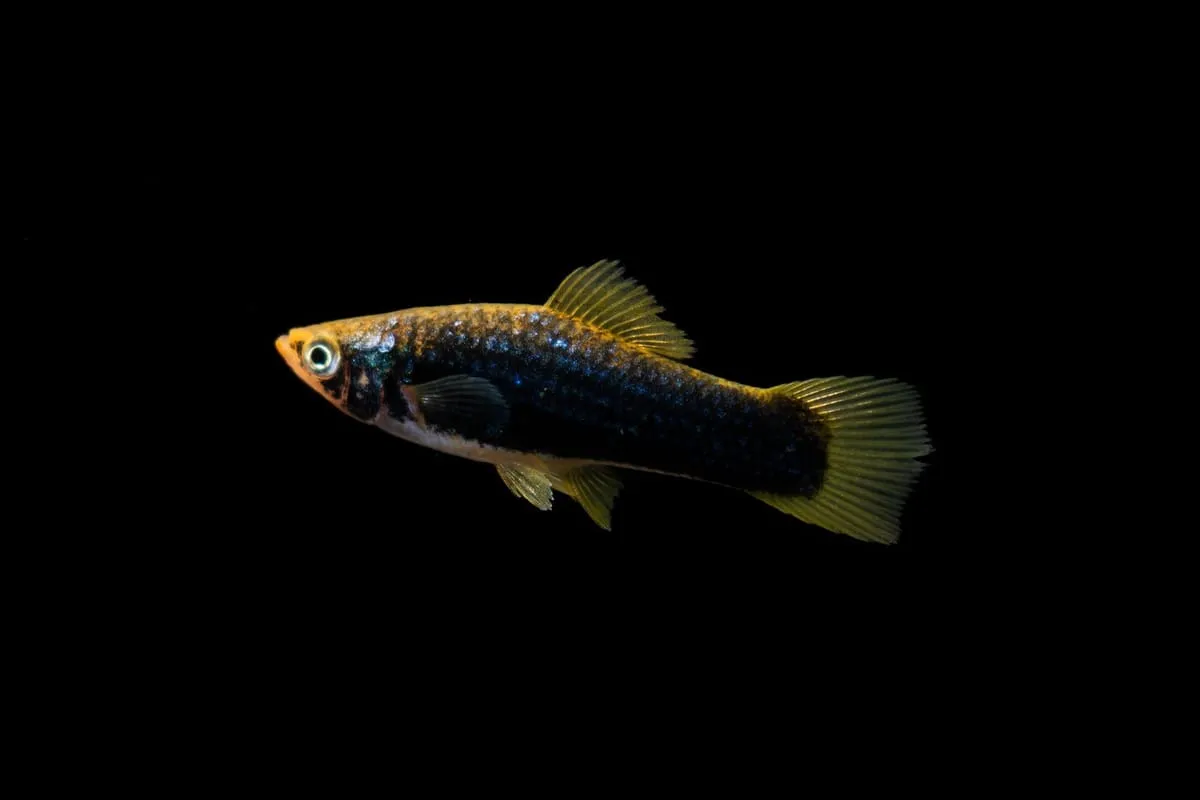
Guppies get sold as the fish for people who have never kept fish, and that reputation is mostly earned. They are colourful, cheap, hardy for a tropical fish, and tolerant of the kind of small early mistakes that kill fussier species. What the shop rarely mentions is the other side of easy: guppies breed so readily that a tank of six can become a tank of sixty within a couple of months, and the flashiest, most eye-catching strains are often the least robust fish in the shop. Good guppy care means the basics any tropical fish needs, plus planning for both of those things before they surprise you.
The basics, same as any tropical fish
Underneath the reputation, a guppy needs exactly what most small tropical fish need: a properly cycled, heated, filtered tank, not a bowl or an unheated jar.
Guppies do best in a tank of a sensible size for the number you keep, not the tiny setups they are sometimes sold alongside, since a bigger, more stable volume of water is more forgiving of the odd missed water change and gives fry somewhere to hide, which matters more than it sounds like it should. A heater holding a steady tropical temperature is not optional, and neither is a filter and a full nitrogen cycle before any fish go in, exactly as covered in why fish keep dying and water changes and testing explained. Guppies are genuinely a good species for a first tropical tank, they are just not a no-equipment, no-maintenance one, whatever the shop display implies.
They breed constantly, and that is the first thing to plan for
The single most surprising thing about guppies for a new keeper is how fast an ordinary community tank turns into a guppy farm.
Guppies are livebearers, meaning females carry fertilised eggs internally and release live, swimming fry rather than laying eggs that need tending. A female that has mated even once can keep producing broods roughly monthly for months afterward, using stored sperm, which catches a lot of owners out who assumed removing a male would stop things immediately. If you want a fixed, manageable number of guppies, the only dependable options are keeping a single-sex group, almost always all female since males are the ones people want for colour and finnage, or housing males and females in genuinely separate tanks with no shared water. Anything less than that and you should expect fry sooner or later, and a plan for what happens to them, since a tank stocked for six adults does not have room for six adults plus an ongoing string of broods.
Fin health and the overbred fancy strains
The showiest guppies in the shop, the ones with huge trailing tails and saturated colour, are also often the fish most worth being cautious about.
Decades of breeding for dramatic fins and colour in some fancy guppy lines has come at a cost to hardiness in parts of the trade, with some overbred strains more prone to health problems, weaker constitutions, and shorter lives than plainer, closer-to-wild-type guppies. Long, heavy fins are also more vulnerable to nipping from boisterous tankmates and to fin rot if water quality slips even briefly, so fancy guppies reward closer attention to water changes than the hardiest end of the species does. None of this means avoid fancy strains, they are a large part of why people keep guppies at all, it means buy from a source you trust, watch new arrivals closely for clamped or ragged fins, and keep the water quality tight rather than assuming a guppy’s reputation for toughness covers every strain equally.
Who guppies suit
Guppies suit someone who wants a colourful, active, genuinely easy tropical community fish and is either happy to end up breeding them a little or willing to keep only one sex to avoid it. They are a strong first tropical fish, sociable, easy to feed, and forgiving of the small mistakes beginners make, provided the tank itself is properly heated, filtered, and cycled rather than treated as an afterthought. If you are drawn to the biggest, most extravagant fins in the shop, budget a bit more care and a closer eye on water quality for keeping them looking their best. And if fry showing up unannounced would stress you out rather than delight you, sort out the sexes before you buy rather than after the first surprise batch appears.
Common questions
- Do guppies need a heater?
- Yes. Guppies are tropical fish and need warm, stable water, not a room-temperature tank. A reliable heater keeping the tank in a steady tropical range is essential, the same as it is for any tropical fish, and swings in temperature stress guppies and make them prone to illness.
- Why do I suddenly have dozens of baby guppies?
- Because guppies are livebearers, not egg layers, and a single female that has ever been near a male can produce a batch of live, free-swimming fry roughly every month without any further mating. If you did not want to breed guppies, keeping only females, or moving males to a separate tank, is the only reliable way to stop it, since a divider or "they probably will not" is not.
- Can guppies live with bettas or other fish?
- Sometimes, but plan it carefully rather than assuming. Male bettas can see a flashy, long-tailed male guppy as a rival and attack it, and boisterous fin nippers can shred a guppy's tail regardless of species. Calm, similarly sized community fish in a big enough, well-planted tank tend to work better than anything territorial or nippy.
- How long do guppies live?
- Typically around two to three years with good care, sometimes a little longer. Fancy, heavily bred strains with exaggerated fins or colours are often shorter lived and more prone to health problems than plainer, hardier strains, which is worth knowing before you pick fish purely on looks.