A basket of toys nobody touches is one of the more common, and more confusing, complaints from dog owners. You bought the toy that got rave reviews, your dog sniffed it once, and now it is furniture. It is easy to read this as a dog with no personality for play, but that is rarely the real explanation. Almost always, the toy does not match what that particular dog is actually motivated by, or the way it is being offered is not doing the toy any favours.
Play drive is not one thing
Before blaming the toy, it helps to know that “playing with toys” is really several different motivations wearing one label, and most toys are only built for one of them.
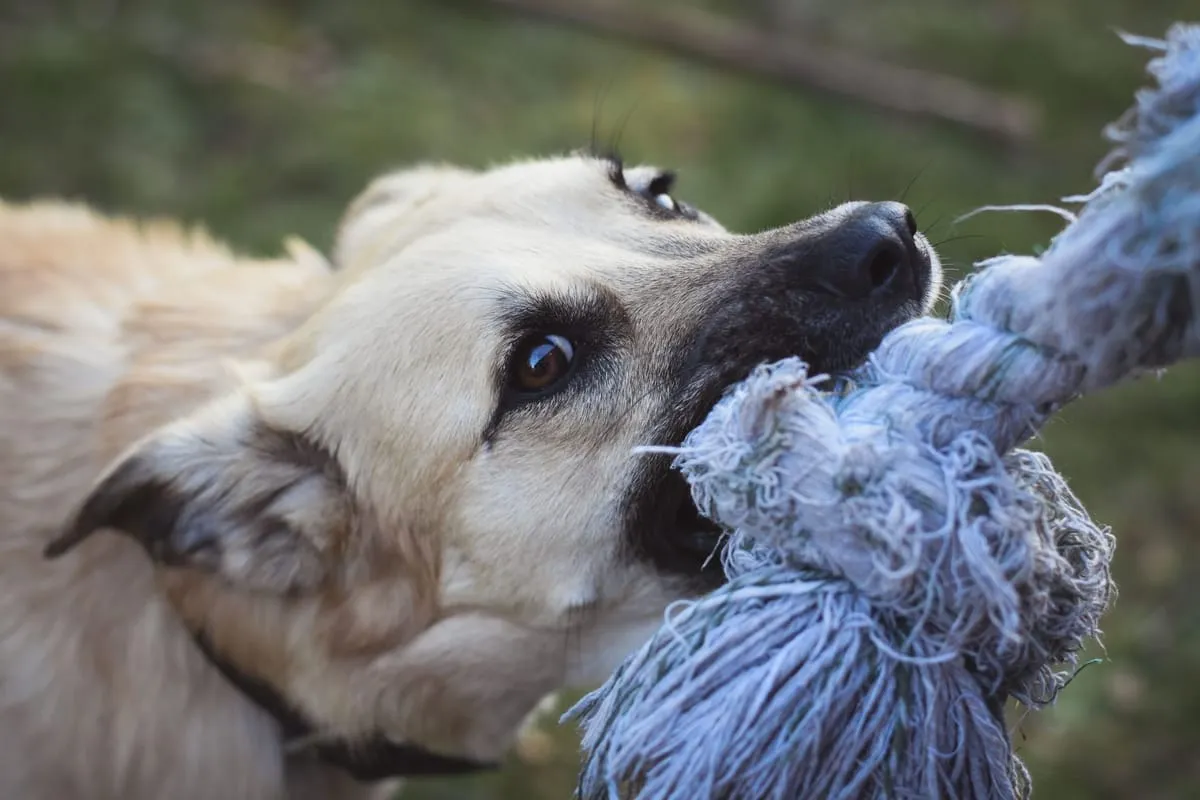
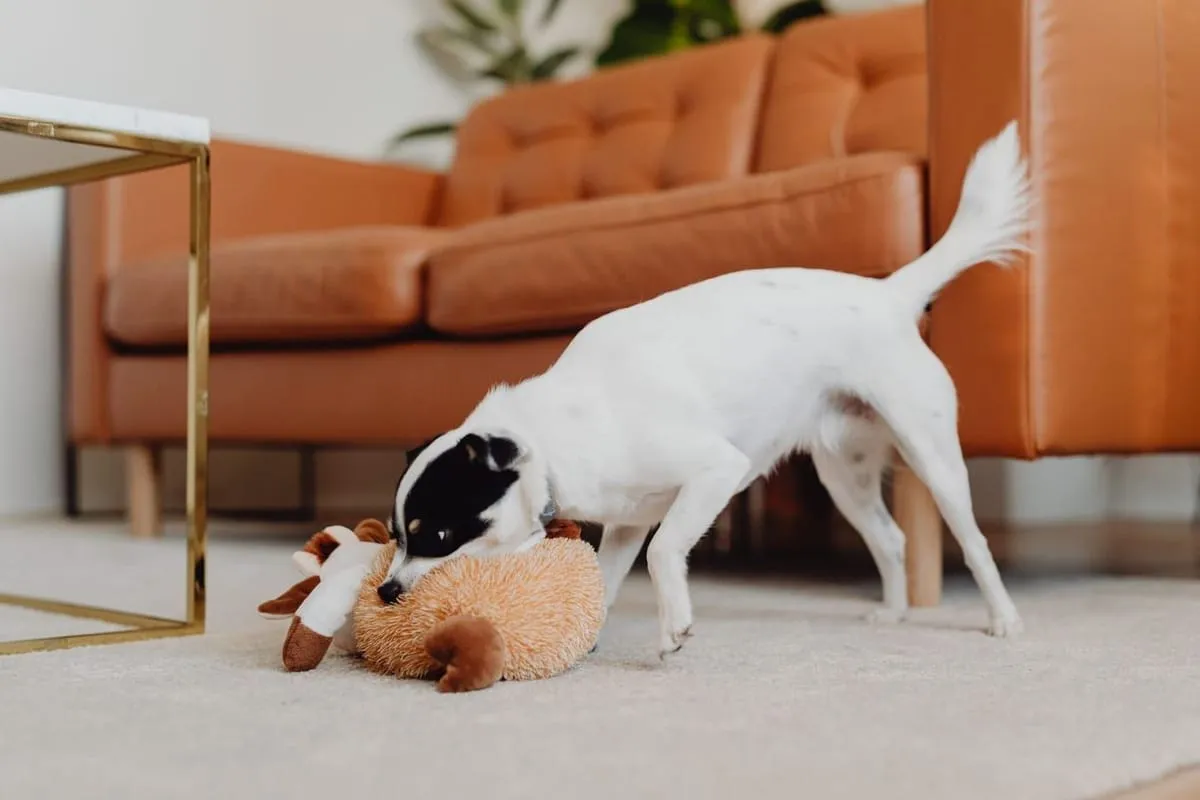
Some dogs are driven by chase, the thrill of something moving away from them that they can catch, which is why a ball or a flirt-pole-style toy lights them up while a static plush toy gets nothing. Others are driven by destruction, the satisfaction of tearing something apart, which a chew-resistant toy actively frustrates rather than rewards. A third group is driven almost entirely by food, they will work hard at a toy that dispenses a treat and ignore an identical-looking toy that does not. None of these dogs is “not a toy dog.” Each one is a toy dog for the wrong toy.
A toy that just sits there is asking a lot
Even the right category of toy can fail if it never moves, because a still object is not naturally interesting to a dog that hunts and chases for a living.
A ball rolled under a sofa, a rope left in a basket, or a puzzle toy set down and walked away from is asking your dog to invent the game itself, which not every dog will do unprompted. Toys tend to get real engagement when a person animates them at first, rolling the ball, tugging the rope gently, nudging the puzzle so a treat falls out, until the dog learns that this particular object leads to something good. For food-driven dogs especially, a toy that only becomes rewarding through your involvement the first few times, rather than one left out to be discovered, tends to get far more use afterwards.
Timing and energy matter more than the toy itself
A dog that is tired, anxious, or simply not in the mood will not play with the best toy on the market, and that is worth ruling out before you conclude the toy has failed.
Play generally happens most readily after a walk has taken the edge off, not before it, since an under-exercised dog is often too wound up to settle into focused play, and an over-exercised or genuinely tired dog has nothing left to give it. A dog that is anxious, whether from a noisy household, a recent change, or general stress, often will not play at all until it feels settled, since play is a behaviour that switches off under real stress in most animals, dogs included. If toy attempts keep landing at the wrong moment, in the middle of a busy house or right after a long day, it is worth trying again in a calmer window before assuming the toy itself is the problem.
Building it up gradually, starting with food
For a dog with genuinely low toy interest, the fastest way in is usually through food rather than through the toy’s own appeal.
Dog Brick Puzzle turns a toy into a source of food a dog already wants, which sidesteps the need for a dog to find the toy interesting on its own terms, and starting on the easiest setting matters, since a dog that gives up on a puzzle once rarely gives it a second chance. Hide-A-Squirrel works on a similar principle for a dog with more of a foraging or nose-driven streak, tucking squeaky toys into a plush trunk so the reward is finding something rather than destroying it outright. For a dog that shows any interest in chasing, Chuckit! Classic Ball Launcher turns a plain ball into a genuinely exciting, fast-moving chase, which is often the easiest drive to tap into first because most dogs have at least some instinct to chase something moving away from them.
Keep early sessions short, end while your dog is still interested rather than after it has lost interest, and resist the urge to buy five more toys before the first one has had a proper chance. A dog that learns one toy is worth its attention generalises that lesson to others far more easily than a dog faced with an overwhelming, ignored pile.
Not every dog needs to love toys the way the adverts suggest. Plenty of dogs get everything they need from walks, sniffing, food puzzles, and time with their people, and a dog that is otherwise happy and well exercised does not need to be talked into loving a squeaky ball. But if you suspect the interest is there and the toy has just been missing it, matching the toy to what your dog actually chases, chews, or forages for, and being the one who gets the game started, usually turns an ignored basket into one that gets used.
Common questions
- Why does my dog ignore every toy I buy?
- Most often because the toy does not match what actually motivates that dog. Some dogs are driven by chasing and catching, some by chewing and destroying, some almost entirely by food, and a toy built for the wrong drive can sit there untouched no matter how good it looks in the shop. Watching what your dog already does for fun, chase a ball in the garden, dig, shred cardboard, tells you which category to shop in.
- Is it normal for a dog to have no interest in toys at all?
- Some dogs genuinely have a low toy drive their whole lives and are perfectly content, affectionate, well-adjusted dogs without ever caring much for a squeaky toy, so it is not automatically a problem to fix. It is worth ruling out that a toy just is not the right kind before assuming your dog is simply not a "toy dog", since food-based enrichment and real-life play like sniffing walks can meet the same need a toy would for another dog.
- Should I be worried if my dog suddenly stops playing with toys it used to love?
- Yes, a sudden change is different from a dog that was never that interested. Dental pain, joint pain, illness, or low mood can all show up first as a dog quietly losing interest in something it used to enjoy, so a genuine drop-off in a previously playful dog is worth a vet check rather than assuming it is just a phase.
- How do I get a low-drive dog to play more?
- Start with food rather than the toy itself, since a toy that dispenses something a dog already wants teaches play value faster than an empty one ever will. Short sessions, an animated toy that moves rather than one that sits still, and stopping before your dog loses interest all help build play into a habit gradually rather than expecting enthusiasm from a standing start.