Every dog has a smell. It is warm and a bit oily and, if you like dogs, honestly not unpleasant in small doses. The question worth asking is not whether your dog smells at all, but whether the smell you are dealing with is that ordinary dog smell or something stronger that keeps coming back no matter how often you bathe them. Those are two very different problems, and treating the second one like the first, with more shampoo and more frequent baths, is how owners end up stuck in a cycle that never actually fixes anything.
The short answer
A faint, warm smell is just dog, and it is not a problem to solve. Dogs have far more oil-producing glands in their skin than we do, and that natural oil is part of what keeps their coat and skin healthy, so a completely odourless dog is not really the goal.
What is worth paying attention to is a smell that is strong, sour, musty, yeasty or fishy, one that returns within a day or two of a bath, or one that has noticeably changed. That kind of smell has a source, and finding the source works far better than washing over the top of it.
Where the smell is actually coming from
Bathing treats the whole dog, but a strong smell almost always has a specific origin, and knowing where to look saves a lot of wasted shampoo.
Skin and coat. This is the most common source by far. Yeast and bacteria live on every dog’s skin in small numbers, and they overgrow when the skin’s balance is disrupted, by allergies, by damp fur that never fully dries, or by skin folds that trap moisture, which is why flat-faced breeds and dogs with thick undercoats often run into this more. Overgrowth smells distinctive, musty and a bit like corn chips or cheese, and it usually comes with greasy patches, redness, or hair loss if you part the coat and look closely.
Ears. A smelly dog is very often a dog with sore ears, and owners frequently miss this because the smell seems to come from everywhere. Yeast and bacterial ear infections produce a sharp, sometimes sweetish odour, along with head shaking, scratching at the ear, or a dog that tilts its head or seems off balance. Our guide to signs of a dog ear infection covers what to look for and when it needs treatment rather than a home clean.
Mouth. Dental disease produces its own strong smell, and because a dog’s whole head is close together, breath odour can read as general dog smell rather than obviously coming from the mouth. If lifting the lip shows tartar or red gums, the smell is very likely dental, and our guide on why dogs get bad breath goes into what helps.
Anal glands. These small scent glands sit either side of the anus and occasionally get overfull rather than emptying naturally, producing a sharp, distinctly fishy smell that is hard to mistake for anything else. A dog scooting along the floor or excessively licking the area is the other giveaway. This one genuinely needs a vet or groomer to sort rather than a bath.
What actually helps
Once you have a sense of where the smell is coming from, the fix is usually specific rather than general.
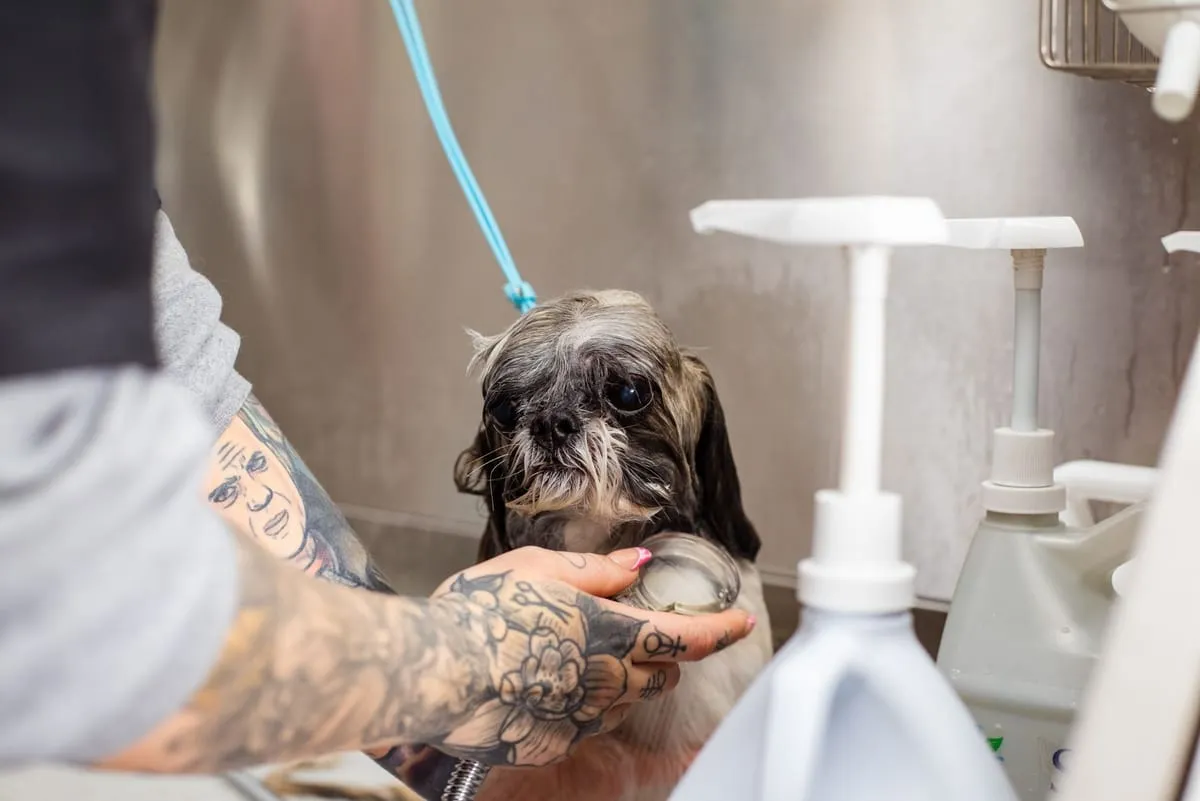
For ordinary coat smell, a wash every four to six weeks with a proper dog shampoo, drying thoroughly afterwards, especially in skin folds and feet, and brushing regularly to keep air moving through the coat covers most dogs. Between full baths, a dog-safe deodorising spritz freshens things up without stripping the coat’s natural oils the way over-bathing does, and it is a reasonable, honest tool for the ordinary in-between smell rather than a fix for anything infected underneath it.
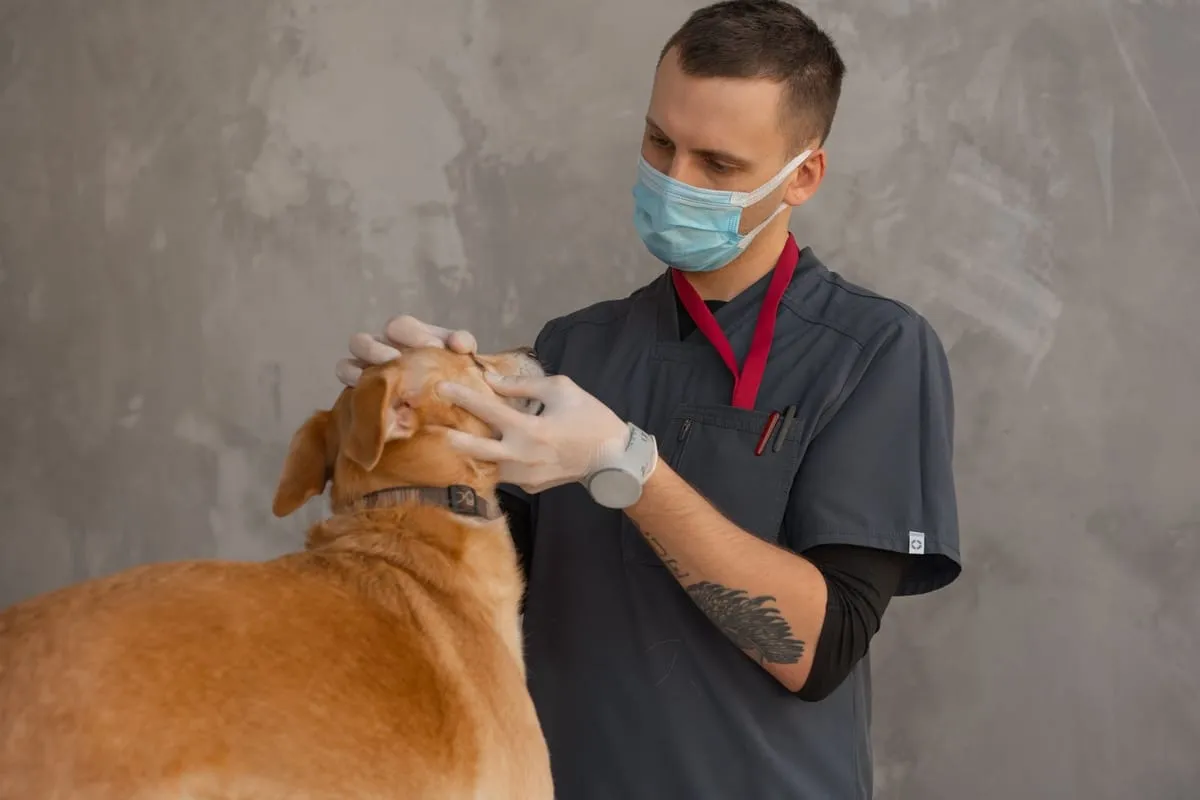
For skin and ear infections, bathing alone will not clear them. These need a vet to confirm what is actually overgrowing and prescribe the right treatment, whether that is a medicated shampoo, ear drops, or, in a genuine allergy case, working out and managing the trigger. Trying home remedy after home remedy on an active infection usually just delays the dog getting comfortable.
Keeping it from coming back
Most ongoing smell problems are really about moisture and airflow. Dry your dog properly after every bath, walk or swim, including between the toes and in any skin folds, since damp skin is exactly where yeast and bacteria get their foothold. Regular brushing does more for coat health, and smell, than people expect, because it keeps natural oils distributed and stops the mats that trap moisture against the skin from forming in the first place. Our guide to grooming your dog at home covers the basics of a routine that actually works.
If your dog has recurring skin or ear trouble despite good drying and grooming, it is worth talking to your vet about an underlying allergy, since chasing the smell without addressing what is driving it tends to be a losing battle. Get the actual cause sorted, and the smell that goes with it generally sorts itself out too.
Common questions
- Is it normal for a dog to have some smell?
- Yes, a faint, warm smell is just what dogs are. They have more oil-producing glands in their skin than we do, and that natural oil carries a mild scent that no amount of bathing removes for good, nor should it. What is not normal is a smell that is strong, sour, musty or fishy, gets worse within days of a bath, or has changed in character. That kind of smell almost always has a specific cause worth finding.
- Why does my dog smell bad again so soon after a bath?
- A smell that returns within a day or two of bathing points to something actively producing odour rather than ordinary dirt, most often a skin infection, a yeast overgrowth in the folds or paws, or ears that need treating rather than washing. Shampoo cannot fix an infection underneath it, so if the smell keeps bouncing back fast, that is a sign to get the skin and ears checked rather than to bathe more often.
- Can a dog's diet make it smell?
- Yes, in a few ways. A food that does not agree with a dog can drive skin allergies and yeast overgrowth, which shows up as odour, and poor-quality gassy diets can also affect how a dog smells from the inside out. This is not the first thing to suspect, but if skin and ears check out clear and the smell persists, a chat with your vet about diet is a reasonable next step.
- When does a smelly dog need a vet rather than just a bath?
- Book a vet visit if the smell is strong, sour, yeasty or fishy, if it comes back within a day or two of bathing, if you can see redness, scabs, hair loss or greasy patches, or if your dog is scratching, shaking its head, or scooting. These point to an infection or an anal gland problem that bathing will not resolve on its own.