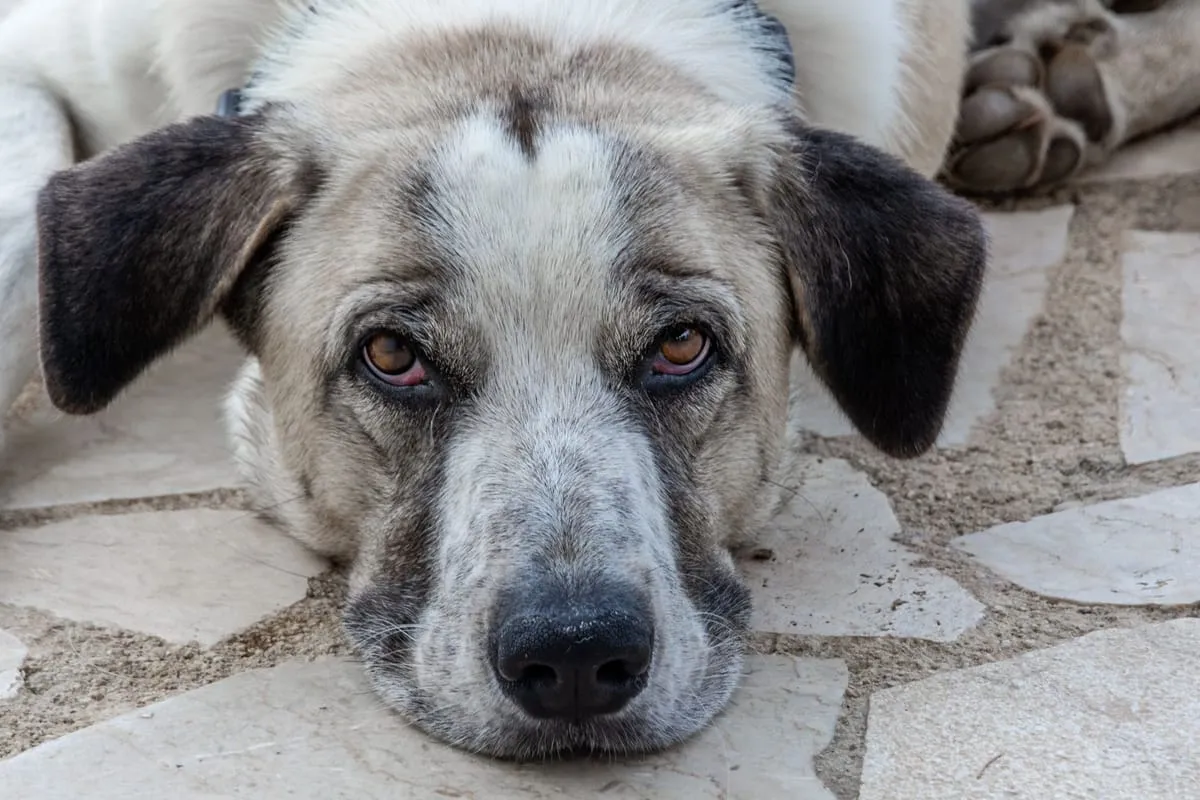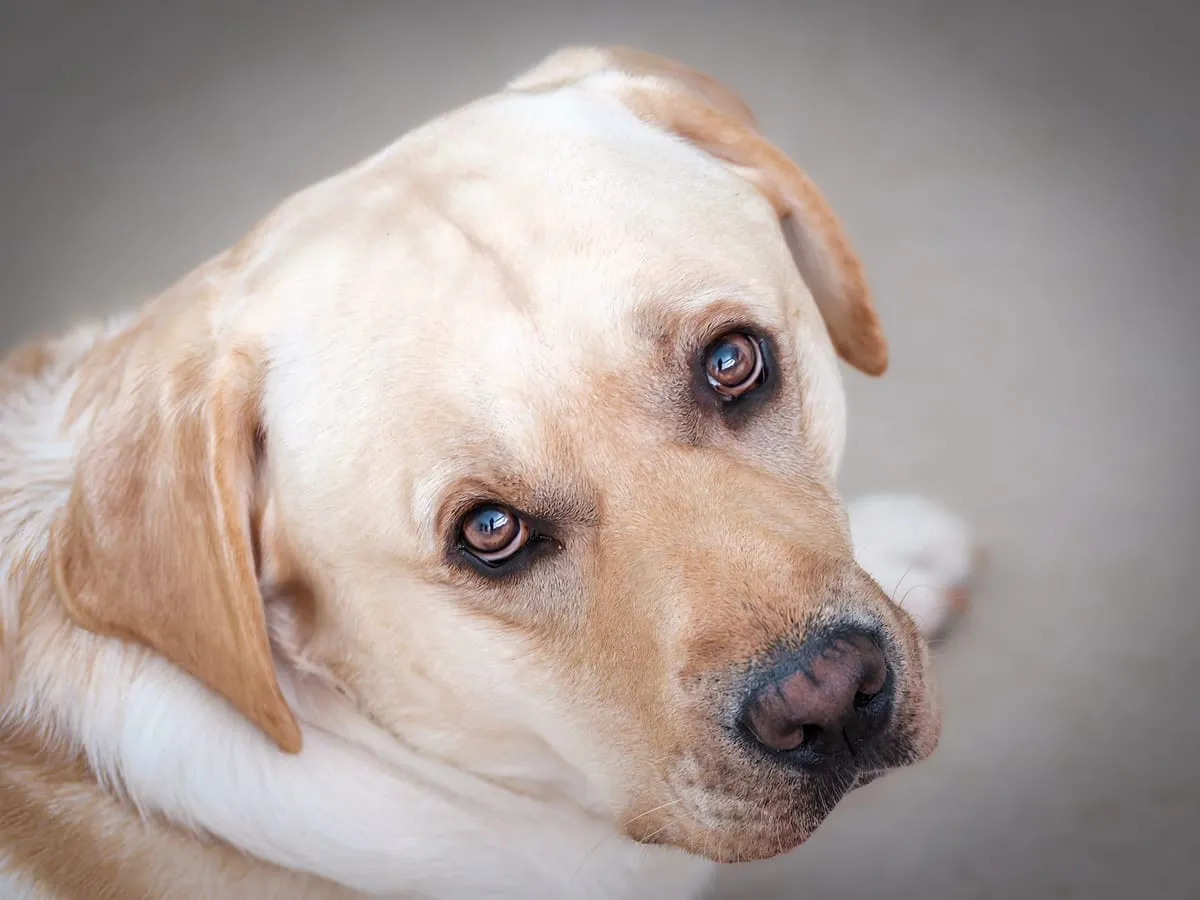
Some dogs do it from across the room. Some do it from eighteen inches away, chin on your knee, unblinking, for long enough that you eventually give in and check what they want. Owners describe the stare in every tone from besotted to unsettled, and the honest answer is that both reactions can be correct, because a dog’s stare changes meaning entirely depending on what is happening around it.
Dogs are unusual among animals in how much they use eye contact with people specifically. Wolves barely hold a human’s gaze at all. Dogs evolved alongside us to read our faces constantly, and the stare is one of the main tools they use to do it.
The soft stare is real affection
The gaze your dog gives you on the sofa, loose-bodied and blinking, is one of the clearest signals of trust a dog has.
Mutual eye contact between a dog and a person it knows well triggers a bonding response in both directions, the same kind of feedback loop that makes eye contact matter in other close relationships. It is a large part of why dogs feel less like animals we manage and more like family members who watch us back. A relaxed dog staring at you with soft eyes, a loose jaw, and a still or gently wagging tail is not asking for anything or testing you. It is simply enjoying being near you, and it is one of the more touching things about living with a dog rather than, say, a cat that mostly tolerates being looked at.
The request stare
A lot of daily staring is your dog asking for something in the only language available to it.
Dogs cannot point and mostly do not use words, so a fixed look at you, then at the lead by the door, then back at you, is a full sentence. The same pattern shows up around dinner time, when a toy has rolled under the sofa, or the second you sit down with food, since dogs are very good at learning exactly which behaviours have worked before. This is also how a lot of accidental training happens. If staring at you at the table has ever produced a dropped scrap, your dog has filed that away permanently, and no amount of you looking sternly back tends to undo it. The stare itself is not the problem there, what you do in response is.
The stare worth taking seriously
Not every stare is friendly, and the ones that are not tend to come with company.
A hard, unblinking stare paired with a stiff, frozen body, a closed mouth, or a low, stiff tail is a warning rather than affection, most often seen when a dog is guarding food, a toy, a bone, or even a person or space it feels protective over. It is the same body language covered in why does my dog guard its food or toys, and the mistake most owners make is pushing straight past that frozen stare because nothing has happened yet. The stare is the “yet” arriving early. Give a guarding dog space the moment you see it, and work on the underlying guarding calmly rather than testing the warning to see if it means it.
Staring can also turn up around pain or illness, since a dog that feels unwell sometimes goes still and fixes on nothing in particular rather than acting distressed in an obvious way, which is one of several subtle signs worth knowing from the signs your dog is in pain. New, glassy staring at walls or empty space in an older dog is a different flag again, and one that belongs with a vet rather than a trainer, since it can be part of the confusion seen in canine cognitive decline.
What to actually do about it
Most staring needs nothing done about it at all, since a dog quietly watching you is simply keeping you company the way dogs have always kept people company. Return the affectionate kind freely, it costs nothing and dogs clearly enjoy it. For the request stare, decide what you are willing to reinforce and be consistent about it, since an occasional win is often enough to keep a habit alive, which is the same trap covered in why does my dog follow me everywhere. For the guarding stare, give space first and work on the underlying issue with patience rather than confrontation. And if the stare is blank, new, and aimed at nothing rather than at you, that is the one to take to the vet rather than the training notebook.
Common questions
- Why does my dog stare into my eyes so much?
- In dogs it is usually affection rather than a challenge. Mutual gaze between a dog and a familiar person triggers the same bonding response you get from other close relationships, which is part of why dogs evolved to read our faces so well and wolves, by comparison, do not hold eye contact with people at all. A soft, relaxed stare from your own dog on the sofa is one of the clearest signs of a settled, trusting relationship, not a dominance move.
- Is it bad to stare back at my dog?
- Not with your own relaxed dog, no. Soft, blinking eye contact back at a dog you know well is fine and often reinforces the bond. The advice to avoid eye contact is really about unfamiliar or nervous dogs, where a hard, unbroken stare can read as confrontational in dog-to-dog language. With a strange or anxious dog, look away or glance rather than lock eyes, and let the dog approach on its own terms.
- Why does my dog stare at me while eating or holding a toy?
- That is usually a guarding stare, and it deserves attention rather than a shrug. A dog that goes still, freezes over food or an object, and fixes you with a hard, unblinking look is asking you to back off, and pushing past that look is how a warning turns into a snap. It belongs in the same conversation as resource guarding more broadly, and is worth working on early with a calm, structured approach.
- My old dog has started staring blankly at the wall, is that normal?
- It is worth a vet visit rather than assuming it is nothing. Fixed, glassy staring at nothing, especially new in an older dog and paired with confusion, pacing, or a disrupted sleep pattern, can point to canine cognitive decline or another medical cause rather than ordinary behaviour. New, unexplained staring in a senior dog is a symptom to get checked, not a habit to train away.