A cat carrying a bit less weight than last year is easy to miss under a full winter coat, and easy to explain away, an older cat slowing down, a fussy eater being fussy. But cats are not built to casually lose weight the way people sometimes do. Ongoing, unplanned weight loss in a cat almost always has a real cause behind it, and quite often that cause is treatable and far more manageable when it is caught early rather than a few months in.
Check by feel, not just by eye
Weight loss hides well under fur, so the scale, or your hands, will notice it before your eyes do. Run your hands along the spine and over the ribs: you should feel ribs easily under a light padding without being able to count each one from across the room, and the spine and hip bones should not feel sharp or prominent. Looking from above, a cat should have a gentle waist rather than a washboard of visible vertebrae, and the belly should not look hollow or tucked up tight. If you can, weigh your cat every month or two on the same scale, since a genuine downward trend over a few weigh-ins is far more useful than a single number, and most vets will do a quick weigh-in between full appointments for free if you ask.
Weight loss with a hearty appetite
This is the pairing that catches owners out most often, a cat that seems to be eating as much as ever, sometimes more, while still losing weight. It feels reassuring, since a cat cleaning its bowl looks like a healthy cat, but in an adult or senior cat it is a classic sign of an overactive thyroid (hyperthyroidism), which speeds up the whole metabolism so calories burn faster than they can be eaten back. Diabetes causes a similar pattern, weight loss alongside a big appetite, usually together with drinking and weeing more than usual. Both are common in cats over about eight, both are diagnosed with a simple blood test, and both are very manageable once identified, but neither gets better by waiting to see if the appetite settles down, because it will not on its own.
Weight loss with a poor appetite
The more intuitive pattern, a cat eating less and losing weight as a result, still needs working out rather than waiting on. Dental disease is one of the most common and most overlooked causes: a mouth full of inflamed gums or a fractured tooth makes chewing painful, so a cat quietly eats less, or switches to swallowing kibble whole, without ever refusing food outright. Chronic kidney disease, common in older cats, typically reduces appetite gradually alongside drinking and weeing more. Inflammatory bowel disease, intestinal parasites, and, less commonly, a tumour can all reduce appetite and absorption enough to cause steady weight loss too. Stress and anxiety, after a move, a new pet, or another change at home, can also genuinely dampen appetite, but that should be a diagnosis of exclusion once a vet has ruled out something physical, not the first assumption.
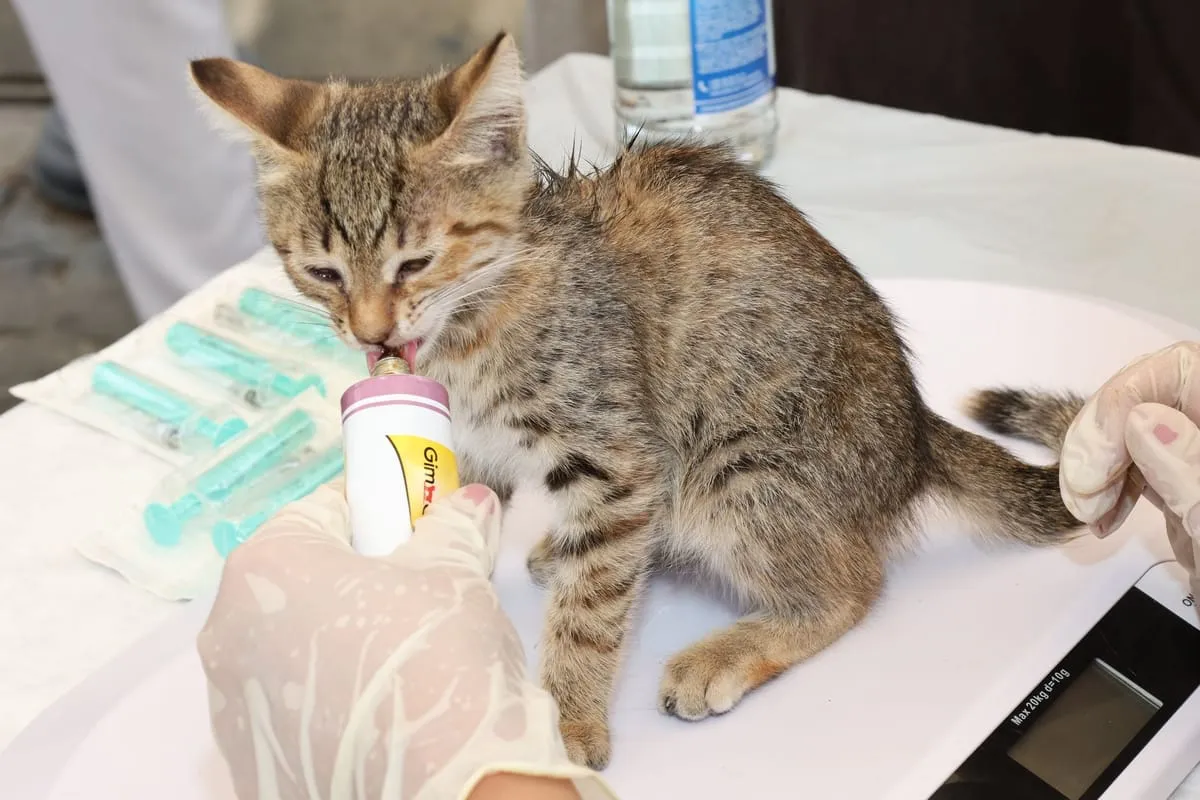
A cat that has gone off its usual food but will still lick at something highly palatable, like Churu treats, can be a useful bridge while you get to a vet and work out the cause, and the tubes are handy for hiding a pill too. It is a way to keep some food going in, not a fix for whatever is putting your cat off eating in the first place.
Dental pain hides especially well
Cats are stoic about mouth pain in a way that surprises a lot of owners, often continuing to eat, sometimes normally from a distance, with a genuinely painful mouth underneath. Signs to look for beyond weight loss include dropping food while chewing, chewing more on one side, bad breath, pawing at the face, or visibly red or swollen gums when you lift the lip, though a cat can have real dental disease with none of these obvious from a casual look. Because it is so easy to miss at home, dental disease is part of why a full vet exam, not just watching eating habits, is the right way to investigate ongoing weight loss.
When to see a vet
See a vet for any cat that has clearly lost weight, whether you noticed it by feel, by a looser collar or harness, or by an actual number on a scale, since this is not something to watch and wait on in cats the way it sometimes reasonably is in people. Treat it as more urgent, meaning a same-day or next-day call, if your cat has also stopped eating for more than a day, seems lethargic, or is vomiting repeatedly, since a cat that goes without food for more than about 24 to 48 hours is at real risk of a dangerous liver condition called hepatic lipidosis on top of whatever caused the weight loss to begin with. For a related everyday worry, our guide on why your cat keeps being sick covers vomiting and regurgitation, but a cat that is actually losing weight, eating a lot or a little, has earned a proper vet visit rather than a few more weeks of watching.
Common questions
- How much weight loss in a cat actually matters?
- More than most owners expect. A cat losing even half a pound sounds small, but that can be five or ten percent of its whole body weight, which is a meaningful and rarely harmless amount. Unlike a person, a cat does not lose weight from a slightly bigger appetite or a busier week, so any clear, ongoing weight loss is worth a vet visit rather than a wait.
- My cat eats fine, or even more than usual, but is still losing weight. Is that normal?
- It is common, but it is not normal, and it is one of the clearest signs of an overactive thyroid or diabetes. Both conditions push a cat's body to burn through calories faster than it can eat to replace them, so a ravenous appetite alongside dropping weight is a classic pairing, not a reassuring one. This combination is worth a vet visit sooner rather than later.
- Can stress cause a cat to lose weight?
- Yes, stress and anxiety can genuinely reduce a cat's appetite enough to cause weight loss, especially after a house move, a new pet, or a change in the household. That said, stress should only be assumed once a vet has ruled out a physical cause, because painful and hidden illnesses are common enough that treating every case as "just stress" risks missing something that needs treatment.
- Is sudden weight loss worse than gradual weight loss?
- Both deserve a vet visit, but weight dropping over days rather than months, especially alongside not eating at all, is more urgent, because a cat that stops eating for more than a day or two is at risk of a serious liver condition called hepatic lipidosis. Gradual weight loss over weeks or months still needs investigating, just without the same same-day urgency.