New cat owners message me constantly convinced something is wrong with a cat that seems to do nothing but sleep. It is one of the most common worries I hear, and almost always the answer is that the cat is behaving exactly like a cat. Understanding why cats sleep the way they do, and what actually changes that pattern, makes it much easier to tell ordinary catnapping from the kind of sleep change that is worth paying attention to.
How much sleep is actually normal
Most adult cats sleep somewhere between sixteen and twenty hours in an average day, which sounds extreme until you understand why.
Cats are built around short, intense bursts of activity rather than sustained effort, a pattern inherited directly from how a small predator hunts in the wild. Stalking, a sprint, a pounce, and it is over in seconds, and that kind of effort is expensive to fuel. Resting for most of the day is how a cat banks the energy for those bursts, and much of what looks like deep sleep is actually a lighter doze that a cat can drop out of instantly if something worth investigating happens nearby.
Why cats are built this way
The pattern goes back further than the sofa.
Wild cats and their close relatives spend the bulk of their day resting between hunts, conserving energy for the moments that actually matter for survival. Domestic cats have kept the same wiring even with a full bowl waiting for them, because evolution has not caught up with central heating and regular meals. Kittens sleep even more than adults while their bodies grow, and most cats are naturally more active around dawn and dusk, the low-light hours their wild ancestors hunted in, which is why a cat can seem to sleep through most of your day and then get busy the moment you turn the lights off.
What changes how much a cat sleeps
Age, weather, and boredom all shift the number without anything being wrong.
Kittens and senior cats sleep more than cats in their middle years, at opposite ends of the same reason, one is growing and the other is naturally slowing down. Cold or grey days tend to increase sleep too, since warmth conservation and simply having less daylight to be active in both push a cat toward the blanket. An under-stimulated indoor cat can also sleep out of sheer lack of anything better to do, which is a different problem from normal rest and is worth addressing with more to do rather than more worry, covered in how to keep an indoor cat from getting bored.
When more sleep is worth a second look
The number of hours is far less useful than whether it has changed from your own cat’s normal.
A cat that has always dozed the day away and continues eating, drinking, using the tray, and greeting you as usual is not showing a problem, whatever the hour count adds up to. What is worth attention is a shift away from that cat’s own baseline, sleeping noticeably more than usual, being harder to rouse, choosing to hide rather than rest in its usual spots, or sleep changes that come together with reduced appetite, weight loss, or reluctance to move or jump.
Most of the time, a cat asleep on the radiator, the windowsill, or your lap for most of the day is simply doing what cats have always done, conserving energy for the bursts of activity that matter to it. Learn your own cat’s normal rhythm and the odd extra nap on a cold day will stop being a worry. The exception is a real change from that baseline, especially paired with eating less or moving less, which is the pattern that deserves an appointment rather than another blanket.
Common questions
- Is it normal for a cat to sleep 16 to 20 hours a day?
- Yes, that is the ordinary range for an adult cat, and kittens and senior cats regularly sleep even more of the day. Cats are built to spend most of their time resting between short bursts of intense activity, which is a hunting strategy rather than laziness, so a cat that naps constantly and is otherwise eating, using the tray, and greeting you normally is not a cat with a problem.
- Why does my cat sleep more in winter or on cold days?
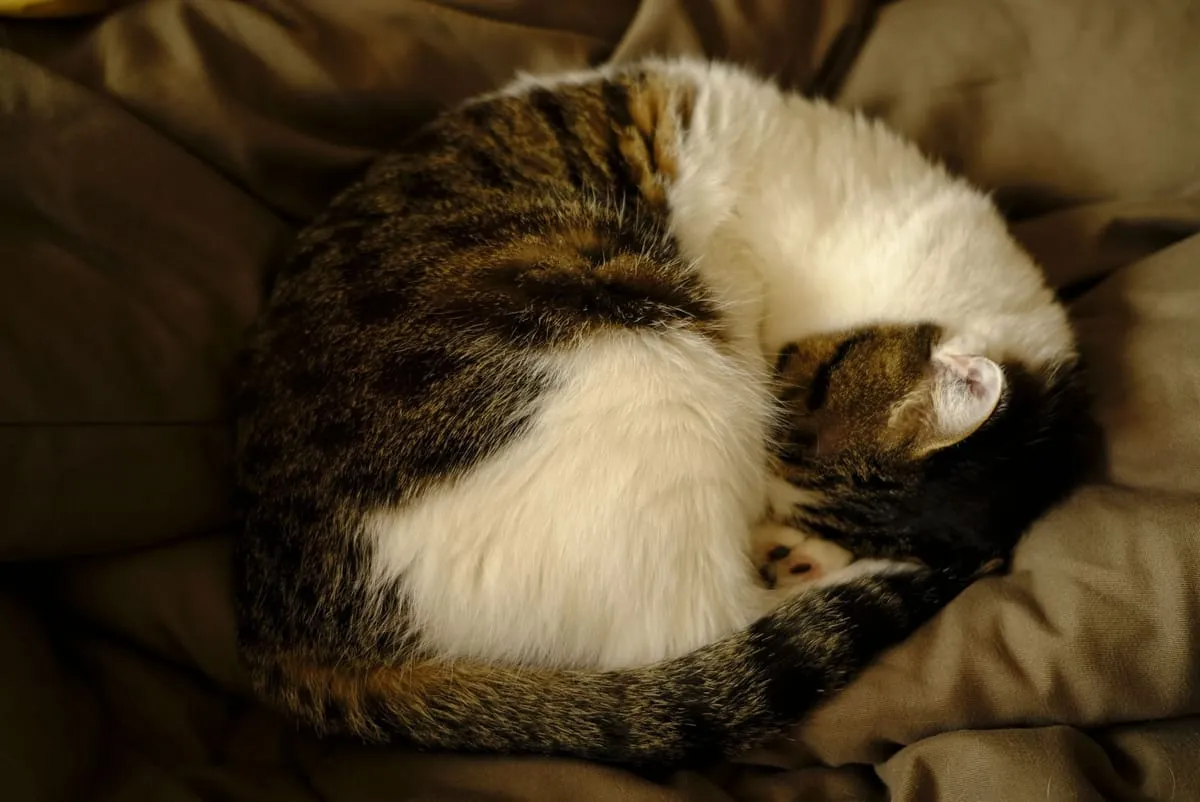
- Cold, dull days genuinely encourage more sleep in cats, partly because it conserves body heat and partly because there is less daylight to be active in. A cat curling up tighter and sleeping a bit longer through a cold snap is normal and usually reverses once the weather warms, especially if it has a warm spot to retreat to.
- How do I know if my cat is sleeping too much because it is unwell?
- The change matters more than the total number of hours. A cat that has always slept a lot and continues to eat, drink, use the tray, and greet you as usual is unlikely to have a problem. A cat that starts sleeping noticeably more than its own normal, especially alongside reduced appetite, weight loss, hiding away instead of resting in its usual spots, or reluctance to move, is showing a pattern worth a vet visit rather than more napping.
- Do older cats sleep more than younger cats?
- Yes, sleep naturally increases with age as cats become less active, and a senior cat sleeping noticeably more than it did as a younger adult is expected. The distinction to watch for is a senior cat that also seems stiff, is eating less, or is harder to rouse than usual, since those combined changes are worth checking rather than putting down to age alone.