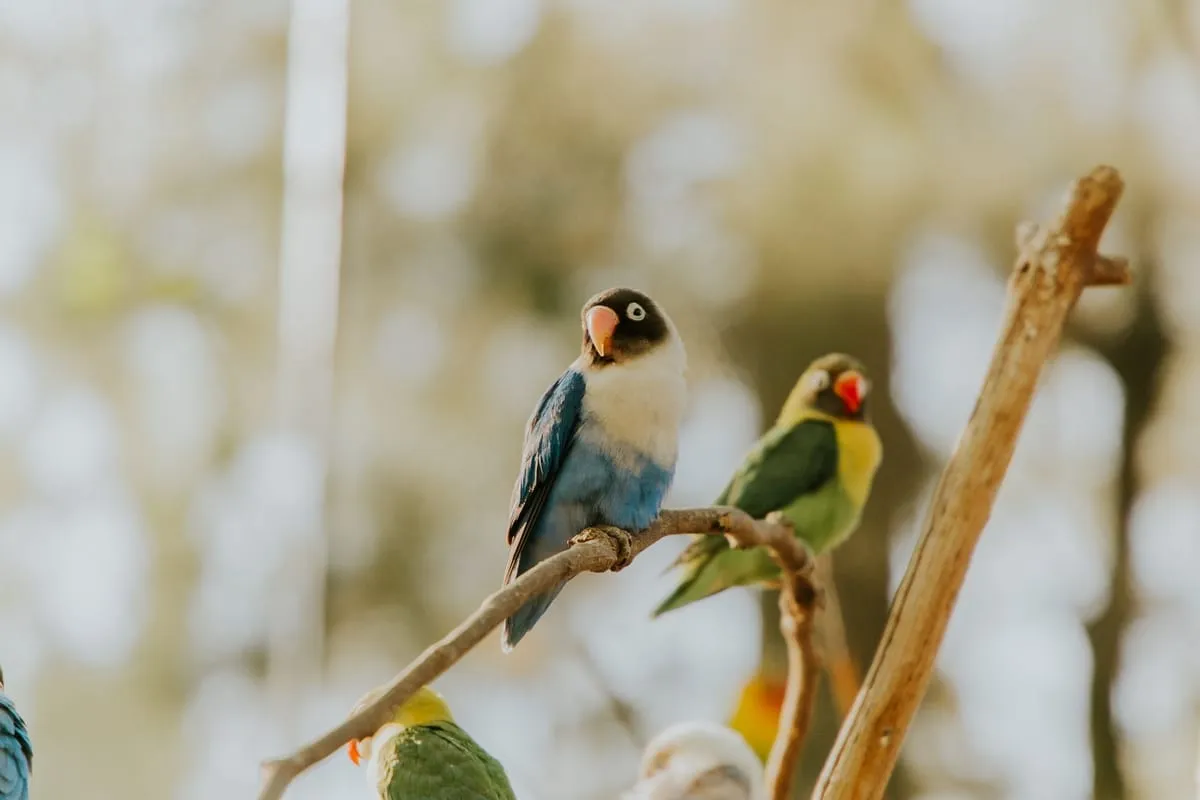
Do not let the size fool you. The lovebird is one of the smallest parrots kept as a pet, but it comes with a personality several sizes larger: bold, curious, often fiercely attached to its favourite person or its bonded partner, and named for the way a paired couple will sit pressed together for hours. That devotion is exactly what draws people in, and it is genuinely rewarding to earn. But a lovebird is still a parrot with a parrot’s full set of needs, and a beak strong enough to surprise anyone expecting a docile little bird. This is a care guide to what a lovebird actually needs, and an honest look at who it suits.
A feisty, devoted personality
The lovebird’s character is the heart of its appeal, and it is worth understanding both sides of it before bringing one home.
Lovebirds are typically bold, active, and inquisitive, often forming an intense bond with either their human or a bonded bird partner, and a well-socialised, hand-tame lovebird can be wonderfully affectionate, seeking out contact and interaction. That same intensity has a sharper edge, though: lovebirds are known for being feisty and can be nippy, particularly if startled, poorly socialised, or protective of a favourite person or territory, and their small size hides a surprisingly strong bite. They are also confident and a little stubborn, closer in temperament to a much larger parrot than their size suggests. None of this makes a lovebird a difficult pet, but it does mean the docile, easy reputation small size sometimes implies is not quite accurate, and building trust patiently, on the bird’s terms, matters as much here as with any parrot, along the lines set out in how to get your bird to trust you.
Company, bonding, and the single-bird question
Because lovebirds are named for their pair-bonding, the question of company comes up more with this species than almost any other pet bird.
A lovebird kept as a single bird can become genuinely devoted to its owner, but only with a real, daily investment of time and attention to substitute for the flock and partner it would otherwise have. Left alone for long stretches with little interaction, a single lovebird is at real risk of loneliness, frustration, and the stress behaviours that follow, including the feather plucking covered in why is my bird plucking its feathers. Keeping a compatible pair solves the company problem directly, but it comes with a trade-off worth knowing in advance.
Diet and housing
As with every parrot, diet and housing are where a lovebird’s long-term health is quietly won or lost.
An all-seed diet is a common and serious mistake with lovebirds just as it is with any parrot, and a proper diet built around good-quality formulated pellets, with a daily variety of suitable fresh vegetables and a smaller portion of seed, gives a far better nutritional base, exactly as explained in why an all-seed diet is bad for your bird. For housing, a lovebird needs a cage that is wide rather than tall, since horizontal space matters more than height for how a small parrot moves and flies, with bar spacing narrow enough that a small, determined bird cannot squeeze through or get a head stuck. A spacious flight cage gives real room to move, and daily supervised time outside the cage in a bird-proofed room lets a lovebird stretch its wings properly rather than being confined all day. Fresh water, a few perches of varying width and texture, and a calm, draft-free spot for the cage round out the basics.
Enrichment, and who a lovebird suits
Finally, that sharp intelligence needs an outlet, and it is worth being clear-eyed about the commitment before choosing this bird.
A bored lovebird is a bird more likely to become nippy, noisy, or plucky, so a rotating supply of safe toys to chew and forage through matters here just as much as it does for any parrot, and the same principles in how to keep a parrot from getting bored apply directly. A foraging wheel or a playstand for supervised out-of-cage time both give a curious lovebird a job to do, which tends to produce a calmer, more settled bird than one left with nothing to occupy it. As for who a lovebird suits: it is a good fit for someone drawn to a small, feisty, characterful parrot who is willing to earn trust patiently, provide either a partner bird or serious daily one-on-one time, and commit to the diet, space, and enrichment a full parrot needs despite the small size. It is a poor choice for anyone wanting a quiet, low-maintenance starter bird, expecting an instantly cuddly pet, or unable to give a single bird the daily attention it would otherwise get from a partner.
Get the company, diet, housing, and enrichment right, and a lovebird repays the effort with a huge amount of personality for such a small animal, often becoming one of the most devoted birds an owner will ever keep. Go in expecting a docile, easy pet, though, and the lovebird’s feisty streak will likely be the first surprise. Know that going in, and it stops being a surprise and becomes simply part of the bird’s charm.
Common questions
- Do lovebirds need to be kept in pairs?
- Not strictly, but they are a genuinely social, pair-bonding species, and a single lovebird needs a great deal of daily attention from its person to fill that role. A single, well-handled lovebird can become deeply bonded and affectionate toward its owner, but if you cannot offer a lot of interaction, a compatible pair is often the kinder option, with the understanding that a bonded pair will usually be close to each other rather than to you.
- Are lovebirds good pets for beginners?
- They can be, but they are not the mellow starter bird their small size suggests. Lovebirds are feisty, can be nippy, and have a surprisingly strong beak and a strong personality for their size, so they suit someone prepared to earn trust patiently rather than someone wanting a quiet, easy first bird.
- Why is my lovebird plucking or aggressive?
- Both are usually signs an underlying need is not being met, most often boredom, loneliness, an unsuitable diet, or a health problem, in the same way covered generally in why a bird plucks its feathers. A sudden change in behaviour is always worth a check with an avian vet first, since pain and illness are common hidden causes.
- How long do lovebirds live?
- Well cared for, a lovebird commonly lives into its teens, sometimes reaching twenty years, which is a long commitment for such a small bird. That lifespan is exactly why getting the diet, company, and enrichment right early matters so much.