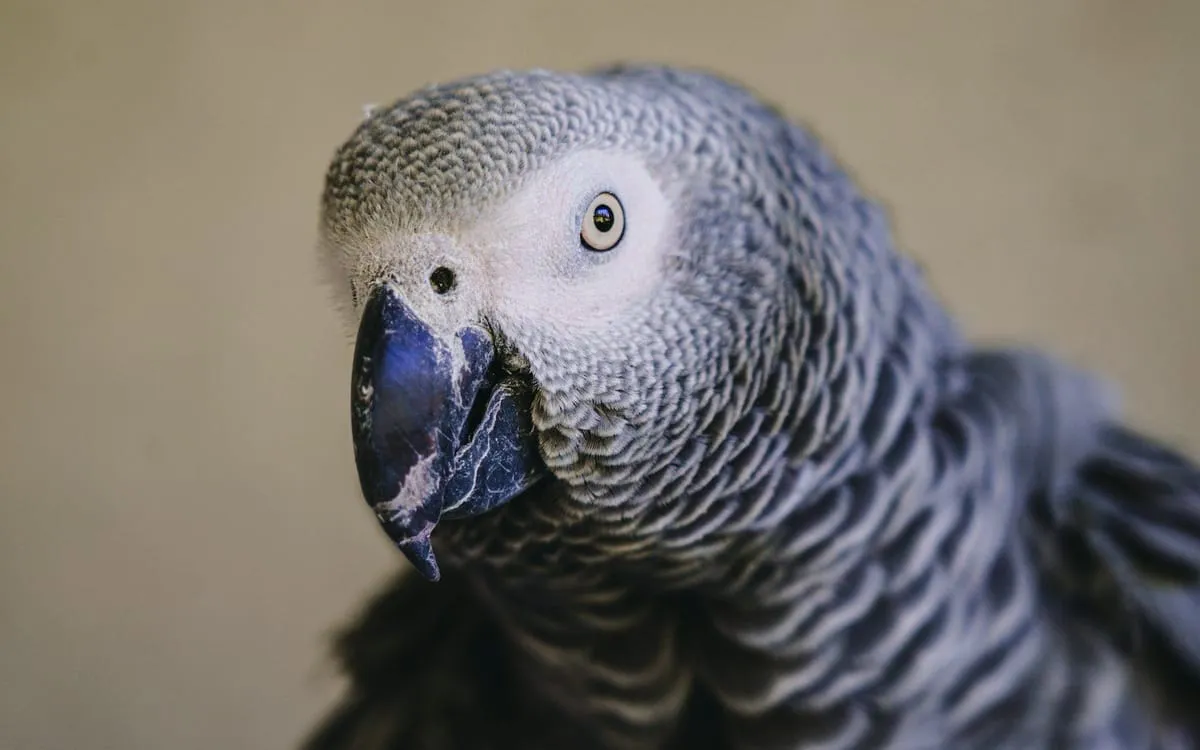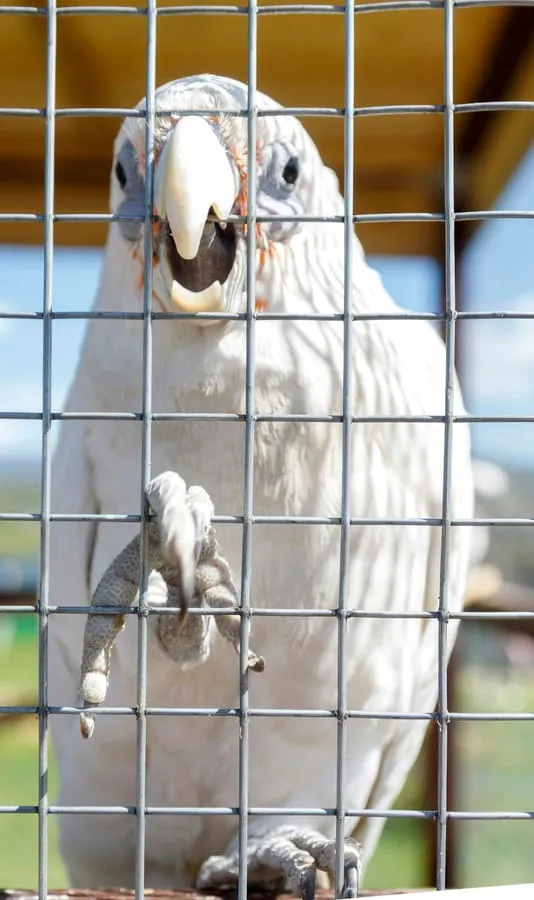
Every bird owner who has been bitten asks the same question afterward: why. It stings, sometimes literally draws blood, and it can feel like betrayal from a bird you have hand-fed treats and talked to all week. But a bite is rarely the mystery it feels like in the moment. Birds communicate constantly, and by the time a beak connects, your bird has usually already told you it was unhappy in several other ways first.
The warning came before the bite
Biting is close to the last step in a bird’s communication, not the first.
Before a beak ever touches you, most birds go through a sequence: eyes pinning (the pupil rapidly shrinking and expanding), feathers slicking down flat against the body, a stiffened posture, leaning or backing away, and sometimes an open beak held still as a warning. A bird that is truly at ease has loose, slightly fluffed feathers, a relaxed stance, and eyes that are not pinning. The bite you did not see coming was very likely preceded by two or three of those signals in the seconds before, and the reason it felt sudden is that most of us were not taught to read them.
The different reasons behind a bite
Not every bite means the same thing, and the right response depends on which one you are actually dealing with.
Fear bites happen when a bird feels cornered or threatened and has no way to escape, often from a hand that came in too fast or from a stranger reaching in without warning. Territorial bites cluster around the cage or a favourite perch, a bird defending space it considers its own rather than reacting to you personally. Hormonal biting shows up in adult birds during breeding season and can appear seemingly overnight in a bird that was previously easy, often paired with other seasonal changes covered in why does my parrot scream, since both behaviours spike together. Overstimulation bites happen mid-play or mid-cuddle, when a bird that was enjoying attention gets too worked up and the excitement tips into a nip. And a bite that comes from being handled in a spot that would not normally bother your bird, or that comes with the bird sitting fluffed and quiet beforehand, is worth treating as a possible pain signal rather than a behaviour problem.
What not to do
The instinct to react sharply to a bite is completely understandable, it hurts, but reacting big is usually the worst thing you can do for the relationship. A loud yelp or a big flinch can also accidentally reward a bird that bit for attention, since to a bird, a dramatic reaction is still a reaction. The better response is calm and boring: put your bird down gently if you can do so safely, step back, and give it a moment without extra attention, drama, or scolding.
Rebuilding trust after a bite
If biting has become a pattern, the fix is almost always slower and less exciting than owners want, but it works.
Go back to basics with short, low-pressure interactions your bird can succeed at, letting it choose to step up rather than forcing a hand in. Reward calm behaviour with a favourite treat or praise, and stop an interaction the moment you see early warning signs rather than pushing through to see what happens, since ending things calmly before a bite reinforces that giving a warning is enough, it does not need to escalate. Consistency across everyone in the household matters here too, a bird that gets mixed handling from different people learns mixed lessons. If your bird is going through a hormonal phase, reducing petting along the back and under the wings, keeping cage-side interactions brief, and making sure it is getting enough sleep in a dark, quiet space overnight can take the edge off considerably. A cage cover earns its keep here in any room that does not go properly dark on its own.
Biting is one of the most common reasons people give up on a bird, which is a shame, because most biting has an identifiable cause and responds well to patience rather than force. Learn your bird’s specific warning signs, work out which category of bite you are actually dealing with, resist the urge to punish, and rebuild trust with small, successful interactions rather than big ones. A bird that trusts you to read its signals and respect them tends to reach for its beak far less often.
Common questions
- Why does my bird bite me for no reason?
- It is very rarely no reason, it is usually a reason you missed. Most bites are preceded by body language, pinned eyes, raised feathers, a stiff stance, a leaning-away, that a bird gives before it ever reaches for skin. Once you learn to read those signals in your own bird, a lot of bites that felt random start making complete sense.
- Should I punish my bird for biting?
- No. Punishing a bird for biting, shouting, flicking its beak, or shutting it away, teaches it that you are unpredictable and worth biting harder next time, not that biting is wrong. Birds do not generalise punishment the way we hope. The far more effective response is to remove your attention calmly and work out what triggered the bite in the first place.
- Why has my bird suddenly started biting when it never used to?
- A sudden change is worth taking seriously rather than dismissing as a phase. Hormonal seasons, a new environment, a change in routine, or fear from a bad experience can all flip a previously easy bird into a biter. Pain or illness can too, since a bird that is hurting will often bite when handled somewhere that would normally be fine, so a vet check is worth ruling out if nothing else has changed.
- Will my bird ever stop biting completely?
- Most biting can be reduced dramatically, though a bird that is startled, in pain, or being handled against its wishes may always have the option available to it, the same as most animals. The realistic goal is a bird that rarely bites and gives you clear warning when it is about to, not a bird that has had the instinct removed.